



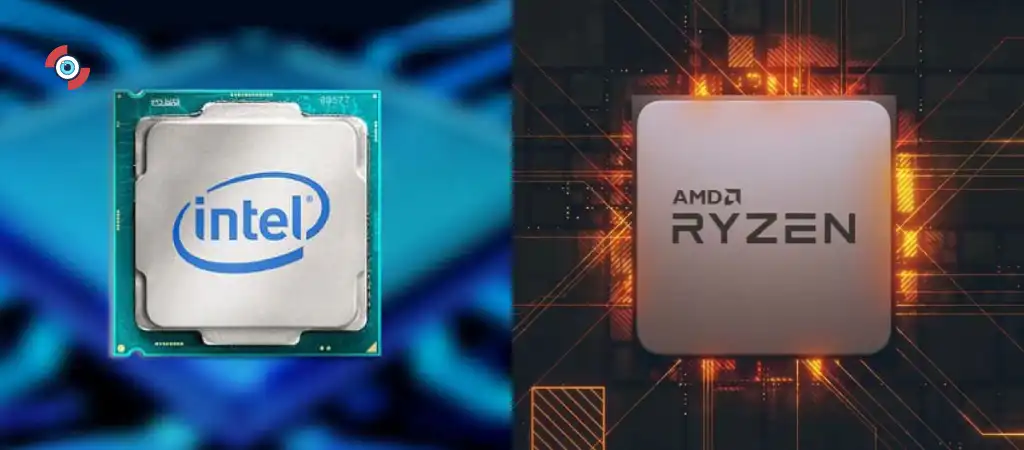
The question of whether Intel or AMD is better for gaming is a long-standing debate in the world of PC enthusiasts and gamers. Both companies have their strengths and weaknesses, and the choice between them often depends on a variety of factors, including budget, performance requirements, and personal preferences. Is Intel Or AMD Better For Gaming?
This comprehensive guide aims to explore the differences between Intel and AMD processors, their respective advantages and disadvantages, and ultimately help you decide which is better for gaming.
Intel and AMD
Intel Corporation
Intel Corporation, founded in 1968, has long been a dominant player in the semiconductor industry. Known for its powerful processors, Intel has consistently pushed the boundaries of CPU technology. Over the years, Intel has developed a reputation for delivering high-performance CPUs that excel in single-core tasks, making them a favorite among gamers who prioritize speed and efficiency.
Advanced Micro Devices (AMD)
Advanced Micro Devices, commonly known as AMD, was established in 1969 and has grown to become Intel’s primary competitor in the CPU market. AMD has a history of innovation and has been a pioneer in developing multi-core processors. With its Ryzen series, AMD has gained significant ground in the gaming community, offering high-performance CPUs at competitive prices.
Factors to Consider When Choosing a CPU for Gaming
When deciding between Intel and AMD for gaming, several factors should be considered. These include performance, price, power consumption, and future-proofing. Understanding these factors will help you make an informed decision.
Performance
Single-Core vs. Multi-Core Performance
-
Intel
Traditionally, Intel processors have excelled in single-core performance, making them ideal for games that rely heavily on single-threaded operations. Games such as those in the real-time strategy (RTS) and simulation genres often benefit from Intel’s high clock speeds.
-
AMD
AMD processors, particularly the Ryzen series, offer exceptional multi-core performance. Modern games that are optimized for multi-threading can take advantage of AMD’s numerous cores and threads, resulting in smoother gameplay and better multitasking capabilities.
Gaming Benchmarks
In gaming benchmarks, the performance of Intel and AMD CPUs varies depending on the specific game and resolution. In general, Intel CPUs tend to perform slightly better in 1080p gaming due to their higher clock speeds and superior single-core performance. However, as the resolution increases to 1440p or 4K, the performance gap narrows, and AMD’s multi-core advantages become more apparent.
Price
Price is a crucial factor for many gamers, especially those building a gaming PC on a budget. Both Intel and AMD offer a range of processors at different price points, but AMD is often considered the more budget-friendly option.
-
AMD
AMD has built a reputation for offering high-performance CPUs at competitive prices. The Ryzen series, in particular, provides excellent value for money, making AMD a popular choice among budget-conscious gamers.
-
Intel
Intel processors tend to be priced higher, especially at the high end of the market. While they offer excellent performance, the premium price tag may not be justified for gamers who do not require the absolute best in single-core speed.
Power Consumption and Thermal Efficiency
Power consumption and thermal efficiency are important considerations, especially for gamers who plan to overclock their CPUs or build compact gaming rigs with limited cooling options.
-
AMD
AMD’s Ryzen processors are known for their efficiency and relatively low power consumption. The use of a 7nm process technology has allowed AMD to produce CPUs that run cooler and consume less power, making them an attractive option for energy-conscious gamers.
-
Intel
Intel processors have historically consumed more power and generated more heat, particularly in high-performance models. However, Intel has made strides in improving efficiency with its newer architectures, narrowing the gap with AMD.
Future-Proofing
Future-proofing is the ability of a CPU to remain relevant and capable of handling new games and software for several years. This factor is essential for gamers who want to maximize their investment.
-
AMD
AMD’s commitment to supporting the AM4 socket across multiple CPU generations has provided a level of future-proofing for its customers. Gamers can upgrade to newer Ryzen CPUs without needing to replace their motherboard, making it a cost-effective choice in the long run.
-
Intel
Intel has historically required new motherboard chipsets for its CPU upgrades, limiting future-proofing to some extent. However, Intel’s latest CPUs are designed to be compatible with newer technologies, such as PCIe 4.0, ensuring they remain relevant for future gaming needs.
AMD vs. Intel: Popular Gaming CPU Models
To better understand the strengths and weaknesses of Intel and AMD processors, let’s examine some popular models from each brand and their performance in gaming scenarios.
AMD Ryzen Series
AMD Ryzen 5 5600X
The AMD Ryzen 5 5600X is a mid-range CPU that has gained popularity among gamers for its excellent performance and affordability. With 6 cores and 12 threads, it delivers strong multi-core performance and is well-suited for modern gaming and multitasking.
-
Performance
The Ryzen 5 5600X performs exceptionally well in both single-core and multi-core tasks, making it a versatile choice for gaming and other demanding applications.
-
Price
Priced competitively, the Ryzen 5 5600X offers excellent value for money, appealing to budget-conscious gamers who want high performance without breaking the bank.
AMD Ryzen 7 5800X
The AMD Ryzen 7 5800X is a high-performance CPU with 8 cores and 16 threads, making it ideal for gamers who demand top-tier performance in both gaming and content creation.
-
Performance
The Ryzen 7 5800X excels in multi-core tasks and offers strong single-core performance, making it suitable for a wide range of gaming and productivity applications.
-
Price
While priced higher than the Ryzen 5 5600X, the Ryzen 7 5800X provides excellent performance for its cost, making it a compelling choice for gamers who require additional cores.
AMD Ryzen 9 5900X
The AMD Ryzen 9 5900X is a powerhouse CPU with 12 cores and 24 threads, making it one of the most powerful processors in AMD’s lineup.
-
Performance
The Ryzen 9 5900X delivers exceptional performance in both gaming and productivity tasks, thanks to its high core count and impressive multi-threading capabilities.
-
Price
As a high-end CPU, the Ryzen 9 5900X is priced accordingly, making it a premium choice for gamers who want the best performance without compromise.
Intel Core Series
Intel Core i5-11600K
The Intel Core i5-11600K is a popular mid-range CPU that offers excellent gaming performance at an affordable price. With 6 cores and 12 threads, it competes directly with the AMD Ryzen 5 5600X.
-
Performance
The Core i5-11600K excels in single-core tasks, making it a great choice for games that prioritize speed and responsiveness.
-
Price
The Core i5-11600K is priced competitively, providing excellent value for gamers who want strong performance without overspending.
Intel Core i7-11700K
The Intel Core i7-11700K is a high-performance CPU with 8 cores and 16 threads, offering a balanced mix of single-core and multi-core performance.
-
Performance
The Core i7-11700K performs well in both gaming and productivity tasks, thanks to its high clock speeds and efficient architecture.
-
Price
Positioned as a high-end CPU, the Core i7-11700K is priced higher than mid-range options but offers strong performance for its cost.
Intel Core i9-11900K
The Intel Core i9-11900K is a top-of-the-line CPU with 8 cores and 16 threads, designed for gamers who demand the best performance in every scenario.
-
Performance
The Core i9-11900K excels in single-core tasks and delivers impressive performance in gaming and content creation.
-
Price
As a premium CPU, the Core i9-11900K commands a high price, making it suitable for gamers who prioritize top-tier performance above all else.
Gaming Performance Comparison
To determine whether Intel or AMD is better for gaming, it’s essential to consider the performance of their respective CPUs in various gaming scenarios. The following sections provide an overview of how Intel and AMD processors perform in different gaming resolutions and scenarios.
1080p Gaming
At 1080p resolution, the CPU plays a significant role in determining gaming performance. In this scenario, Intel’s superior single-core performance often gives it an edge, resulting in higher frame rates and smoother gameplay.
-
Intel Advantage
Intel CPUs, with their high clock speeds and efficient architecture, tend to perform better in 1080p gaming, particularly in games that rely heavily on single-threaded operations.
-
AMD Competitiveness
AMD’s Ryzen CPUs still offer strong performance at 1080p, especially in games optimized for multi-threading. While Intel may have a slight edge, the difference is often minimal and may not be noticeable to most gamers.
1440p Gaming
At 1440p resolution, the GPU becomes a more critical factor in gaming performance. As a result, the performance gap between Intel and AMD narrows, with both brands offering excellent gaming experiences.
-
Intel and AMD
Both Intel and AMD CPUs provide strong performance at 1440p, with minimal differences in frame rates. The choice between the two often comes down to other factors, such as price and future-proofing.
4K Gaming
At 4K resolution, the GPU is the primary bottleneck, and the CPU’s impact on performance is reduced. In this scenario, both Intel and AMD processors perform similarly, and the choice between them is less critical for gaming performance.
-
Intel and AMD Parity
At 4K, the performance difference between Intel and AMD CPUs is negligible, making either brand a viable choice for gamers who prioritize high-resolution gaming.
Additional Considerations
Beyond performance, price, and gaming benchmarks, several other factors can influence the decision between Intel and AMD for gaming.
Overclocking Potential
Overclocking is the practice of increasing a CPU’s clock speed to boost performance. Both Intel and AMD offer CPUs with unlocked multipliers, allowing gamers to overclock their processors for additional performance.
-
Intel Overclocking
Intel CPUs, particularly those with a “K” designation, are known for their strong overclocking potential. Enthusiasts who enjoy tweaking their systems for maximum performance may prefer Intel for its overclocking capabilities.
-
AMD Overclocking
AMD’s Ryzen CPUs also offer good overclocking potential, particularly with proper cooling solutions. While Intel may have a slight edge in this area, AMD provides a viable option for gamers interested in overclocking.
Compatibility and Ecosystem
The compatibility of a CPU with other components, such as motherboards and cooling solutions, can impact the overall gaming experience.
-
AMD Ecosystem
AMD’s commitment to the AM4 socket has created a stable ecosystem for its processors, allowing gamers to upgrade their CPUs without replacing other components.
-
Intel Ecosystem
Intel’s frequent chipset updates may require gamers to invest in new motherboards for CPU upgrades, potentially increasing the cost of future upgrades.
Integrated Graphics
For gamers who do not plan to use a dedicated graphics card, integrated graphics performance can be an important consideration.
-
Intel Integrated Graphics
Intel’s integrated graphics solutions, such as Iris Xe, offer decent performance for casual gaming and multimedia tasks.
-
AMD Integrated Graphics
AMD’s APUs, which combine a CPU and GPU on a single chip, provide strong integrated graphics performance, making them a good choice for budget gaming builds.
You Might Be Interested In
- Top Ai Text Generator Options For Crafting Compelling Content
- Does Google Docs Use Your Writing For Ai?
- Why Use Ai Search Optimization Tools For Your Business?
- What Are The Six Applications Of Expert System?
- What Ai Log Analyzers Can Uncover?
Conclusion
The question of whether Intel or AMD is better for gaming does not have a one-size-fits-all answer. Both companies offer a range of CPUs that cater to different gaming needs and budgets. The choice between Intel and AMD ultimately depends on individual preferences and priorities.
- AMD Better for Gaming: For gamers who prioritize value for money, multi-core performance, and future-proofing, AMD is often the better choice. The Ryzen series offers competitive performance at a lower price point, making it an attractive option for budget-conscious gamers.
- Intel Advantage: For gamers who prioritize single-core performance and overclocking potential, Intel may have the edge. Intel CPUs excel in scenarios where single-threaded performance is critical, providing a slight advantage in some gaming situations.
In conclusion, both Intel and AMD have their strengths and weaknesses, and the best choice depends on your specific gaming requirements and budget. By considering factors such as performance, price, power consumption, and future-proofing, you can make an informed decision that suits your gaming needs.
FAQs about Is Intel Or AMD Better For Gaming?
What are the key differences between Intel and AMD processors for gaming?
Intel and AMD processors differ in several key areas that affect gaming performance:
- Single-Core vs. Multi-Core Performance: Intel processors traditionally excel in single-core performance due to higher clock speeds, making them ideal for games that rely on single-threaded operations. AMD processors, especially the Ryzen series, offer strong multi-core performance, which is beneficial for modern games optimized for multi-threading.
- Price: AMD CPUs often provide better value for money, especially in the mid-range and high-end segments. Intel processors tend to be priced higher, particularly those with the highest single-core performance.
- Power Consumption and Thermal Efficiency: AMD’s Ryzen CPUs are known for their energy efficiency and lower power consumption, which can result in cooler operation and less demand on cooling systems. Intel has made improvements in this area but generally consumes more power at higher performance levels.
- Future-Proofing: AMD’s use of the AM4 socket across multiple generations provides better future-proofing, allowing easier CPU upgrades without the need to change the motherboard. Intel frequently updates its chipsets, which can limit upgrade paths.
How does gaming performance differ between Intel and AMD at various resolutions?
Gaming performance between Intel and AMD CPUs varies depending on the resolution:
- 1080p Gaming: At 1080p resolution, CPU performance plays a more significant role. Intel CPUs, with their superior single-core performance, often have an advantage, delivering higher frame rates in many games.
- 1440p Gaming: As the resolution increases to 1440p, the GPU becomes more influential in determining performance. The performance gap between Intel and AMD narrows, with both offering competitive gaming experiences.
- 4K Gaming: At 4K resolution, the GPU is typically the bottleneck, and the CPU’s impact is minimized. Both Intel and AMD processors perform similarly at this resolution, and the choice between them is less critical for 4K gaming.
Which brand offers better overclocking potential for gaming enthusiasts?
Overclocking potential can be a decisive factor for gaming enthusiasts looking to maximize their CPU’s performance:
- Intel: Intel’s “K” series processors, such as the i5-11600K and i9-11900K, are known for their strong overclocking potential. These CPUs have unlocked multipliers, allowing users to increase clock speeds for enhanced performance, provided they have adequate cooling solutions.
- AMD: AMD’s Ryzen CPUs also offer good overclocking capabilities. While they may not reach the same clock speeds as Intel’s top overclockers, Ryzen processors can achieve significant performance gains, particularly with high-quality cooling systems.
How do Intel and AMD compare in terms of integrated graphics for gaming?
Integrated graphics performance is essential for gamers who do not plan to use a dedicated graphics card:
- Intel Integrated Graphics: Intel’s integrated graphics solutions, such as Iris Xe, provide decent performance for casual gaming and multimedia tasks. However, they are generally not suited for demanding AAA titles at high settings.
- AMD Integrated Graphics: AMD’s APUs (Accelerated Processing Units), which combine a CPU and GPU on a single chip, offer superior integrated graphics performance compared to Intel. AMD’s Vega graphics technology allows for smoother gameplay and better frame rates in many games, making them a good choice for budget gaming builds.
What factors should be considered when choosing between Intel and AMD for gaming?
When choosing between Intel and AMD for gaming, consider the following factors:
- Performance Needs: Determine whether you prioritize single-core performance (Intel) or multi-core performance (AMD) based on the types of games you play.
- Budget: AMD often provides better value for money, especially in mid-range and high-end CPUs. Consider your budget and whether Intel’s premium price for high-performance models is justified for your needs.
- Power Consumption and Cooling: AMD CPUs generally consume less power and run cooler, which can be advantageous for energy efficiency and cooling requirements.
- Future-Proofing: If future upgrades are a priority, AMD’s consistent socket support (AM4) may offer more flexibility compared to Intel’s frequent chipset updates.
- Integrated Graphics: If you do not plan to use a dedicated GPU, AMD’s APUs offer better-integrated graphics performance, making them a more attractive option for budget gaming systems.
