



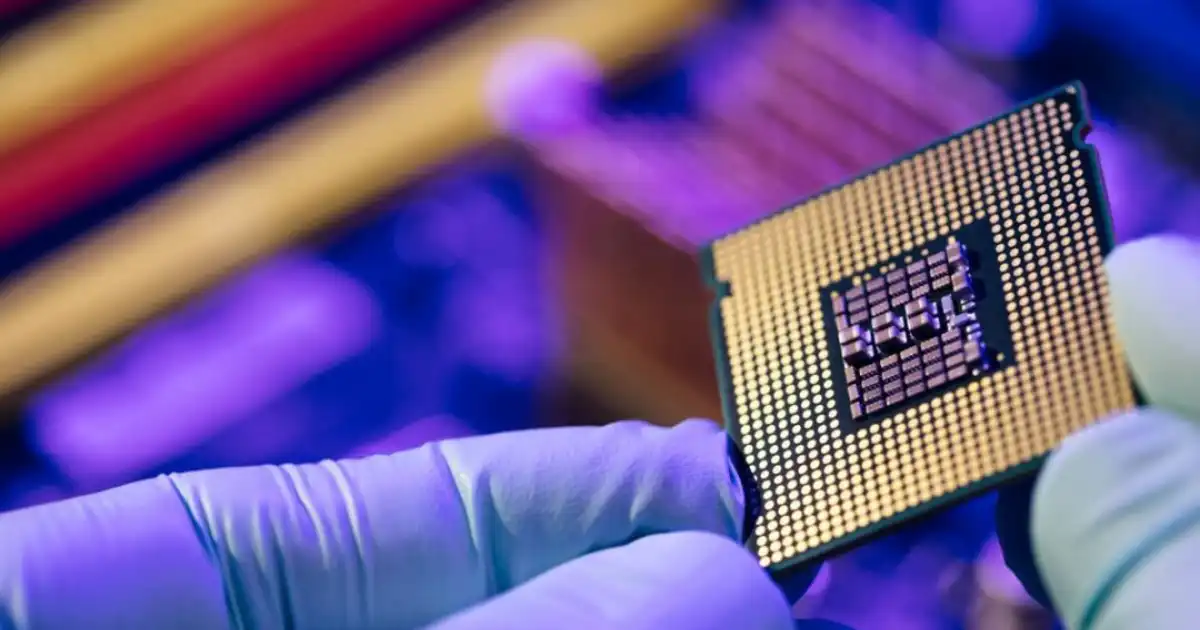
The semiconductor market has become the most competitive industry in international trade. The United States and China, as two of the world’s biggest economies, are in competition regarding the control of the critical supply chain. The latter part of this article is about the seven major choke points in the conflict between the US and China over semiconductor issues, along with their importance in the technology perimeter.
Semiconductor Supply Chain Choke Points: Why They Matter Cut choke points in the semiconductor supply chain might disrupt the function of highly specialized technologies such as computers, smartphones, and even automobiles. Relying on these products would trigger a serious economic recession. These tiny chips that are at the center of the hyper-connected global economy enable the technology that scoops jet engines, smartphones, laptops, military systems, and artificial intelligence to function.
Now think about how two of the world’s superpowers, the US and China, are at conflict for control of this much-needed resource. The choke points of the semiconductor supply chain have turned into the center stage of competition for these two colossal countries. With billions of dollars on the table, they are trying to outplay each other in a more complex game for the dominance of technology.
The Power of Choke Points
In other words, semiconductor technology choke points are lines or zones that have huge strategic importance. These points have power over other nations because they control some production or distribution resources essential to them. In relation to the battle between China and America in technology, the points that control the circumference of the technology have become choke points. Grasping these areas of focus is important in comprehending the continuous antagonism between China and the USA.
All of those points affect the technological and economic ecosystem of the country by affecting things like technology and the ability to manufacture. From the supply of semiconductor fabrication equipment, through the supply of strategic metallic elements like rare earths, and the flow of vital intellectual property, all these points need to be controlled and each nation is poised to take on the challenge.
So, let’s move on to the seven choke points that are driving the conflict further.
The SME Market
Equipment used for the manufacturing of semiconductors is one of the most sensitive choke points in the fight between the US and China for control over semiconductors. There is highly specialized equipment that must be used to manufacture the most advanced chips, and that very equipment is largely controlled by a handful of companies in the United States, like Applied Materials, Lam Research, and KLA Corporation.
These American companies dominate the production of photolithography tools, which are used to etch transistors onto semiconductor wafers. Without access to this equipment, Chinese semiconductor manufacturers cannot produce state-of-the-art chips. To respond to this, China is heavily trying to invest in its own manufacturing technology in order to self-sustain. However, that level of sophistication is difficult to attain, fueling this choke point highly.
China’s efforts are also being significantly slowed by the US government, which has been employing export controls to restrict Chinese companies, especially SMIC (Semiconductor Manufacturing International Corporation), from gaining access to that particular equipment. This has greatly decelerated China’s progress towards self-sustainability in semiconductor production.
The Supply of Rare Earth Elements (REEs)
The supply of rare earth elements is yet another crucial choke point with respect to the availability within the semiconductor supply chain. Some examples of these elements are neodymium, dysprosium, and lanthanum which are utilized in the manufacturing of high-performing semiconductors, magnets, and batteries. While these elements are not scientifically ‘rare’ in nature, the necessary processes for extracting and processing these elements is restricted to a select few countries, China being the primary supplier of REEs.
China is now in control of nearly 60-70% of the rare earth production and uses this power as leverage. The US is especially vulnerable in the choke point of REE’s supply, as they have no choice but to depend on China. If China decided to stop exports of certain rare earths, this would seriously disturb the global semiconductor supply chain leading to dreadful delays in chip production along with a surge in manufacturing costs.
In the last couple of years, the US has attempted to explore new sources and widen their mining activities in an attempt to lessen the burden that Chinese rare earths had on them. Nevertheless, China’s grasp on these choke points still gives them the edge in the semiconductor competition.
The Jigsaw Puzzle of Intellectual Property and Technology Transfer
Choke points are not only found in the US, but within the domain of technology as well. As was discussed before, America has long been at the forefront of innovation in semiconductor technology, and American firms own a plethora of patents on semiconductor technologies. Conversely, China has been popularly accused of stealing Intellectual Property, including Segments of the semiconductor industry.
The American government has effectively used control over vital American patent holders as a choke point in the technology war. The U.S. has dramatically limited the transfer of key IP with the aim of stagnating Chinese technological growth and further constraining access to state-of-the-art chip designs. Bans on Huawei during the Trump Administration came, in part, because of worries over alleged semiconductor technology theft by the firm.
China’s reaction has been to stimulate innovation domestically through legal means. State organs have actively encouraged local businesses to construct and own IP in semiconductor technology, and supported them legally with processes and laws for how to safeguard the inventions. Even though there is a movement within China toward expanded semiconductor research and development, this effort is heavily frustrated by the lack of access to critical U.S. IP, because it serves as a key choke point in the conflict.
Capacity of Semiconductor Foundries and Manufacturing
One of the access choke points is the world’s leading semiconductor foundries. The foundry model where firms TSMC and Samsung fabricate chips designed by other companies is the cornerstone of semiconductor production. While many semiconductor design companies such as Intel and NVIDIA are based in the US, the US is dependent upon these foundries for the chips’ actual fabrication.
Taiwan’s TSMC is the world’s most advanced semiconductor foundry, boasting the ability to fabricate cutting edge chips at the 5nm and 3nm nodes. Both the US and China are dependent on TSMC and other foundries for the fabrication of HPC ICs. However, the geopolitical tension of US and China relations has increased the worries regarding the security of semiconductor supply chains especially since Taiwan is located in the proximity of China. If China were to obtain Taiwan, it would gain control of one of the most important choke points and the Taiwan Strait would fundamentally change the scope and balance of power in the semiconductor industry.
To address the issue, the US has encouraged the relocation of semiconductor manufacturing to within its borders. Intel, for example, is actively seeking to increase its foundry capacity in the US, but it will take time to achieve the scale and sophistication of TSMC.
The South China Sea and Its Geopolitical Consequences
The area surrounding the South China Sea is another geopolitical hotspot and a potential flashpoint in the US-China semiconductor competition. This region is important for the global semiconductor supply chain, as it supports some of the key manufacturing and shipping activities for electronics and semiconductor components. Additionally, the South China Sea contains major shipping lanes for unfinished and finished semiconductor goods.
Increasing military activity by China in the South China Sea is raising eyebrows regarding the protection of international shipping lanes. China’s expanding power in the region, along with other allied nations, poses serious threats to the prosperity of trade including the semiconductor components along the China Sea. Any conflict or stagnation in the South China Sea would disrupt the already fragile global supply chain for semiconductors. This makes it a critical choke point.
The 5G Competition and Infrastructure
The deployment of modern 5G technology serves as a choke point in the semiconductor tussle. The infrastructure that supports and even the devices that make use of the 5G networks depend on sophisticated semiconductor technologies. Both the United States and China are competing for leadership in the 5G market, having Chinese firms like Huawei as dominant players in the 5G network components and US companies taking the lead in devices which are 5G enabled.
The United States has strategically placed its position to limit China’s reach to 5G technologies by claiming undue advantages of espionage with the use of Huawei’s equipment. Consequently, a number of countries have prohibited or restricted the use of Huawei components into their 5G networks. On the other hand, China is aggressively trying to achieve self-sufficiency in its 5G infrastructure development in the hopes of establishing a globally accepted dominating standard. There is further competition to control the infrastructure that supports 5G technology which demonstrates how even at this level, choke points in the semiconductor industry can affect the balance of power internationally.
The Effect of Semiconductor Export Restrictions and Sanctions 7
Export bans and sanctions have become the defining feature of the ongoing US-China trade war over semiconductors. The US has imposed a number of trade penalties against China with the primary goal of prohibiting China from acquiring advanced semiconductor technologies as well as parts needed for their manufacturing. The sanctions specifically aim at Chinese technology companies such as Huawei and ZTE, who are barred from buying essential semiconductor parts from American firms.
These bans have drastically affected China’s technology sector, forcing Chinese firms to develop new supply chains and cultivate indigenous technologies. China has made strides in achieving self-sufficiency in semiconductor production; however, the US still restricts exports as the most potent lever to keep China from attaining self-sufficiency in advanced technologies.
You Might Be Interested In
- What Does Ais Stand For In School?
- What Are Enterprise Saas Solutions Used For?
- how does ai improve content quality and readability?
- How Do Humans And Ai Work Together In Real Scenarios?
- Why Is Software User Experience Important?
Conclusion
The semiconductor industry has become increasingly important to China’s efforts to modernize its economy and compete internationally. Each of these choke points contributes to shaping the way technology continues to develop in the world, and it is essential to understand that proprietary information, equipment manufacturing, and even geopolitical rivalries serve a purpose. In the United States and China constantly trying to control the semiconductor market, the whole world will feel the impacts, economically and politically, regardless of what side they choose to stand on.
Moreover, each of these choke points has the potential to completely shift entire industries and economies, due to the global supply chain of semiconductors being so interdependent. The US is at the same stage as China when it comes to progression towards getting these pertinent resources, in an attempt to stay technologically advanced. The way these critical aspects of technology will be controlled is going to change which country will have subsequent control of the global balance of power, politics, and economy.
FAQs about Choke Points
What exactly is the US-China semiconductor standoff?
The United States implemented a series of restrictions aimed at preventing China’s tech industry from accessing advanced semiconductor manufacturing technology, particularly Huawei. China is one of the technological superpowers, and the US is actively trying to stall its expansion by not allowing the Chinese to acquire crucial equipment necessary for the development of electronics and military hardware.
This has led to the US imposing restrictions on the flow of high-end semiconductor manufacturing equipment to China. This incident is one of the components in the growing geopolitical conflict surrounding access to a massively important technology category that enables the functioning of numerous devices and services. These include telecommunications, military technologies, and artificial intelligence.
In retaliation, China has tried to speed up its semiconductor development to limit foreign dependency. The Chinese government has poured money into homegrown research and development within the semiconductor industry by subsidizing local firms and devising policies that promote invention.
In spite of these attempts, China remains dependent on foreign suppliers, especially those from the US and Taiwan, for the most sophisticated chips. The standoff underscores the mounting competition between the two nations for technological leadership and the more profound contest over global power. The US considers the control of semiconductors as a means of consolidating its technology and economy, which it spearheads, whereas China perceives it as a tool to attain self-sufficiency and resilience to foreign sanctions.
What are chokepoint technologies?
Chokepoint technologies can be defined as any important technologies or resources that are critically needed by other countries but are primarily controlled by a few, making them vulnerable to any form of deceptive manipulation. Industries relying on electronics, aerospace, defense, energy, and telecommunication would face serious global consequences if these crucial technologies were not available to them. Rarely do these technologies or resources come by easily and their scarcity does present problems of circumpolitical negotiations. Examples of chokepoint technologies are advanced semiconductor manufacturing equipment, some rare earth metals, and software systems supporting AI and cybersecurity.
Both the United States and China regard chokepoint technologies as an important aspect of competition. The US, especially, has put a lot of effort into denying China access to a number of critical technologies, particularly advanced fabrication equipment for semiconductors. Equally, China has control over a sizable share of the global market for rare earth metals that are essential for the production of everything from computers to solar energy technologies.
The trade conflict between the US and China has made these chokepoint technologies one of the areas of fierce competition where both countries attempt to gain leverage by denying each other access to these resources. Chokepoint technologies are vital in the modern world due to their significance in major sectors of the economy which makes them tools for economic or political control.
How advanced is technology in China?
China has became a global leader in innovation, especially in industries such as manufacturing, telecommunications, and Artificial Intelligence (AI) technology. In recent decades, China has transformed from a manufacturing-centric economy to a fully tech-dependent economy, with the likes of Huawei, Alibaba and Tencent spearheading international innovation. Chinese firms are leaders in the development and adoption of many technologies, including 5G telecommunications, e-commerce, and digital payments.
The other nations of the world are still trying to catch up with China. With the rapid development of the country’s infrastructure, investment in R&D and education, and the closing of the technological gap with Western countries, China has been able to achieve a lot in so many fields. In AI, big-data technologies, self-driving cars and other fields, China has become a global powerhouse.
Regardless of these improvements, China continues to trail behind the United States in certain aspects such as high-end semiconductor fabrication, advanced aerospace technologies, and cutting-edge research like quantum computing and next-generation robotics. Even though Taiwan Semiconductor Manufacturing Company is the largest and most advanced semiconductor foundry in the world, Chinese firms are more competitive in consumer electronics and digital services. Unfortunately, China is still dependent on foreign technologies for critical components such as semiconductor fabrication equipment, high-performance chips, and other sophisticated research instruments.
Beijing intends to eliminate this dependency through ambitious domestic development programs, but the attempt to attain technological self-sufficiency in these highly specialized industries is rather daunting. In summation, China is indeed a growing technology superpower and while its advancements are undeniably astonishing, the country still struggles with specific technological sectors where the US continues to dominate.
Which technologies are considered strategic for China?
Those technologies, which are essential for national security, economic growth, and geopolitical competition, are China’s strategic technologies. The Chinese government has prioritized investing in research, development, and innovation to secure dominant positions in global markets. China has made significant investments in the development of artificial intelligence (AI) technologies as one of the most important strategic technologies. AI is expected to transform manufacturing, healthcare, national defense, financial services, and other sectors. The government has national plans to lead in AI development by 2030 and has invested heavily in AI startups, research AI centers, and developing talent.
Besides artificial intelligence, China considers semiconductor technology as one of the most strategically significant ones for its development. It has been trying to become self-sufficient by reducing its dependence on foreign suppliers of semiconductor products, especially regarding the advanced processes of chip design and fabrication essential in telecommunications, defense, and consumer electronics.
Other China’s strategic technological priorities include 5G telecommunications led by Huawei aiming at achieving global leadership as well as quantum computing, autonomous driving vehicles, and renewable energy technologies to name a few. Improvement of the Chinese capabilities on space exploration and advanced materials is also a focus. The combination of these technologies will provide China with the capability of becoming technologically self-sufficient while strengthening its position as a global player and remaining competitive in the XXI century. Progress in these fields will allow China to claim greater autonomy from foreign technologies while boosting its influence, both militarily and economically.
Which country, China or the United States, has more advanced technology?
It is a nuanced argument. Each country has its own strengths and weaknesses. The United States seems to have the upper hand in most high-tech sectors, especially in advanced semiconductor manufacturing, aerospace, and biotechnology. The US is also home to world superpowers like Apple, Google, Intel, and Tesla which dominate the market with their innovations in AI, consumer electronics, and space technology. On top of that, America possesses a significant edge in scientific R&D by having some of the most prestigious universities and research centers that are developing medicine, quantum computing, and advanced materials.
China Had Successful Strides in Some fields like Telecommunications, AI, UAL, and Consumer Electronics. Huawei, chines companies,nies, and other multinationals such as Alibaba and Tencent have helped China to catch up in 5G, digital payments, e-commerce, and renewable industry revenue. China Furthermore, China has built infrastructure and manufactured, which allows it to dominate new global production.
Advanced semiconductor brings ca competitive edge to the US and Taiwan over China. In the counter-argument, China has experienced impressive growth but the US remains the leader in strategic sectors such as computing, defense, and technology, To conclude, China is catching up with the rate of the US, but the US is the leader.
