



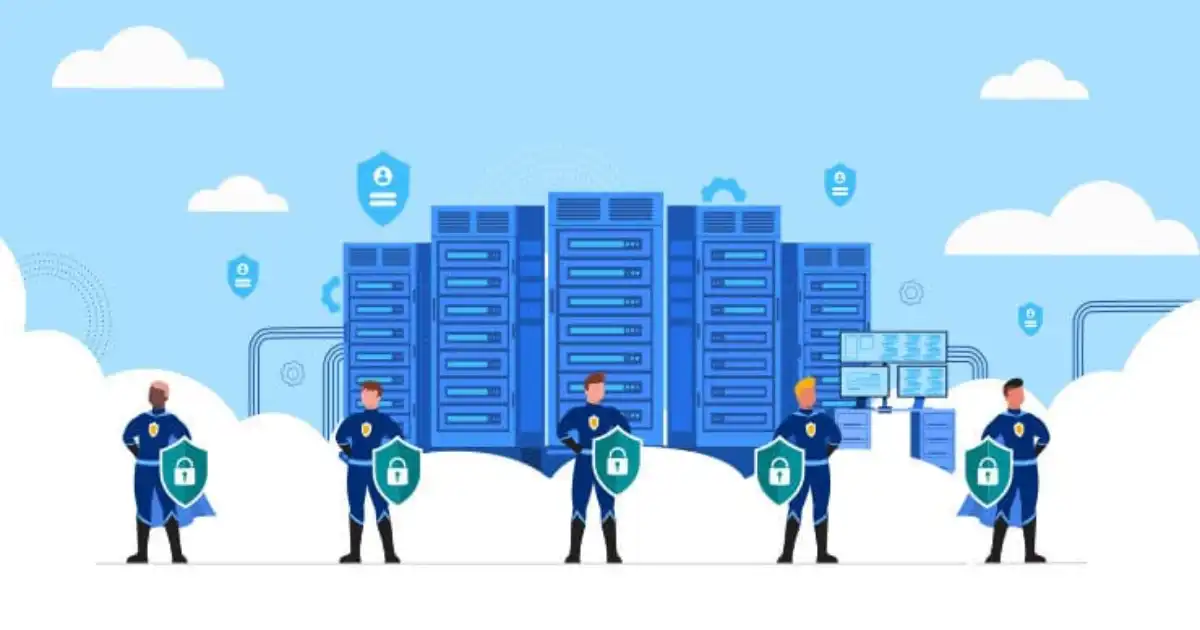
Cloud security compliance is what happens when cloud security stops being just a technical concern and becomes something a business is legally and operationally accountable for. In real environments, it is not just about configuring firewalls or turning on encryption. It is about proving, continuously, that your cloud systems follow specific security controls required by laws, industry standards, or internal governance rules.
In practice, cloud security and compliance are not the same thing, even though people often mix them up. Cloud security is what you do to protect systems: identity management, network segmentation, encryption, monitoring, and patching.
Compliance is what you can demonstrate to auditors, regulators, or customers to prove those protections are consistently in place and properly managed. I have seen environments that were technically secure but still failed compliance audits because they could not produce evidence or because controls were not consistently enforced across accounts.
This is where the shared responsibility model becomes very real. Cloud providers like AWS, Azure, or Google Cloud secure the infrastructure, meaning the physical data centers, hypervisors, and core services. But everything you build on top of that is your responsibility.
That includes identity access management, data classification, configuration settings, logging, and sometimes even encryption choices. What most teams misunderstand is that compliance failures usually happen in the customer-managed layer, not the cloud provider layer.
So when we talk about cloud security compliance in real terms, we are talking about governance over cloud usage, enforcing security controls, and proving that those controls are consistently working across dynamic, fast-changing environments.
Why Is Cloud Security Compliance Important?
Cloud security compliance matters because modern organizations are no longer operating in isolated systems. Everything is connected, distributed, and constantly changing. Data is flowing across services, regions, and sometimes even multiple cloud providers. Without compliance discipline, this complexity turns into risk very quickly.
One of the biggest drivers is data protection. In real cloud environments, sensitive data often ends up in places it should not be. I have seen storage buckets exposed publicly due to a single misconfiguration or databases left without proper access restrictions after a migration. Compliance frameworks exist to reduce these kinds of mistakes by enforcing structured security controls and review processes.
Regulatory pressure is another major factor. Laws like GDPR, HIPAA, and PCI DSS are not optional if your business touches customer data, healthcare records, or payment information. These regulations require organizations to implement and prove strong cloud governance and security controls. The key word here is prove. It is not enough to say data is encrypted or access is restricted. You need logs, policies, and audit trails.
Risk reduction is where compliance becomes practical. Most real-world cloud breaches do not come from sophisticated attackers. They come from simple issues like misconfigured permissions, exposed APIs, or weak identity management. Cloud security compliance forces organizations to standardize configurations, monitor continuously, and reduce human error.
There is also a business angle that often gets underestimated. Customers and enterprise partners increasingly demand proof of compliance before signing contracts. If you cannot show SOC 2 reports or ISO 27001 alignment, deals slow down or disappear entirely. Trust becomes a measurable asset.
In my experience, companies that ignore compliance usually do not fail because of one big incident. They fail because small risks accumulate quietly until something eventually breaks at scale.
Benefits of Cloud Security Compliance
When cloud security compliance is done properly, the benefits are not just theoretical. They show up directly in operational stability and business growth.
The most immediate benefit is improved security posture. Compliance frameworks force organizations to implement baseline security controls like encryption, identity governance, logging, and access reviews. Even if the intention is compliance, the outcome is usually stronger security across the environment.
Reduced breach risk is another practical outcome. Compliance does not eliminate threats, but it reduces the number of obvious entry points. For example, enforcing least privilege access and continuous monitoring significantly lowers the chance of credential abuse or lateral movement inside cloud environments.
Audit readiness is something companies only appreciate when they go through their first serious external audit. Without proper cloud security compliance practices, audit preparation becomes chaotic. Teams scramble to collect logs, screenshots, and configuration evidence. With proper systems in place, evidence is generated automatically through compliance monitoring tools and cloud-native security services.
There is also a direct impact on business credibility. Enterprises want predictable security behavior from vendors and partners. A company that can demonstrate strong compliance posture is far more likely to win contracts, especially in regulated industries.
Finally, compliance actually accelerates enterprise adoption. This sounds counterintuitive, but I have seen it repeatedly. When security and compliance controls are already in place, procurement and legal teams move faster because risk concerns are already addressed. Without it, every deal becomes a custom negotiation about security.
Risks of Not Following Compliance
Ignoring cloud security compliance is rarely a neutral decision. It almost always leads to consequences, sometimes slowly and sometimes catastrophically.
The most obvious risk is legal and financial penalties. Regulations like GDPR can impose heavy fines for data mishandling or breaches. PCI DSS violations can lead to restrictions on processing payments. These are not theoretical penalties. They are actively enforced and often public.
Data breaches are the most visible failure point. In real cloud incidents, attackers often exploit simple issues such as exposed storage, weak credentials, or unmonitored APIs. Without compliance-driven security controls, these weaknesses remain unnoticed until they are exploited. Once data is exposed, recovery is difficult and expensive, even if the breach is contained quickly.
Reputation damage is often more long-lasting than financial penalties. Customers lose trust quickly when sensitive data is involved. I have seen companies recover technically from incidents but still lose market position because customers no longer felt safe using their services.
Operational disruption is another hidden cost. When security incidents happen, teams shift from building to firefighting. Systems get taken offline, investigations begin, and normal development slows down significantly. Without structured cloud governance, these disruptions become more frequent.
Finally, companies lose business opportunities. Enterprise clients often require proof of regulatory compliance before procurement even begins. Without it, organizations are simply excluded from large segments of the market.
Major Cloud Compliance Standards
There are several major compliance frameworks that shape how organizations implement cloud security compliance in practice. Each one focuses on a slightly different angle, but together they define the baseline expectations for modern cloud environments.
GDPR focuses on data protection and privacy for individuals in the European Union. In practice, it forces companies to control how personal data is collected, stored, processed, and deleted. In cloud environments, this often translates into strict data residency rules and strong encryption requirements.
HIPAA applies to healthcare data in the United States. It is less about technology specifics and more about ensuring that systems handling medical information maintain confidentiality, integrity, and access controls. In cloud setups, this usually means strict access logging and controlled administrative access.
PCI DSS is centered on payment card data. It is highly prescriptive and often difficult for cloud teams because it requires strict segmentation, monitoring, and regular testing of security controls. Organizations processing payments cannot treat it as optional.
SOC 2 is widely used in SaaS and technology companies. It focuses on how systems are designed to ensure security, availability, confidentiality, and privacy. In real-world terms, SOC 2 is often about proving that your cloud governance and operational processes are consistent and well documented.
ISO 27001 is a global standard for information security management systems. It is less about specific tools and more about establishing a structured security program. Many organizations use it as a foundation for broader cloud security compliance strategies.
NIST provides detailed cybersecurity frameworks, especially in government and enterprise environments. It is often used as a reference model for building layered security controls and risk management practices in cloud systems.
These frameworks matter because they translate abstract security goals into measurable controls that auditors can evaluate.
Common Challenges in Real Cloud Environments
In real cloud environments, cloud security compliance is rarely straightforward. The biggest challenge is misconfiguration. Cloud platforms are flexible by design, but that flexibility leads to mistakes. A single misconfigured storage bucket or overly permissive IAM role can create a serious compliance gap.
Multi-cloud complexity makes things even harder. Many organizations use AWS, Azure, and Google Cloud simultaneously. Each platform has its own identity systems, logging formats, and security controls. Keeping compliance consistent across all of them requires strong cloud governance, and most teams underestimate the effort involved.
Visibility is another constant problem. Security teams often do not have a unified view of all cloud assets. New services get created quickly, sometimes outside of formal processes, leading to shadow infrastructure that is not properly monitored.
Regulatory change adds another layer of difficulty. Compliance requirements are not static. They evolve as new threats emerge and regulations get updated. Keeping up requires continuous compliance monitoring rather than periodic checks.
Third-party risk is also significant. Many cloud systems depend on external vendors, APIs, and SaaS tools. If those vendors are not compliant or secure, your environment inherits part of that risk.
Best Practices That Actually Work
In real organizations, the best cloud security compliance strategies are the ones that focus on consistency rather than complexity.
Strong IAM is usually the foundation. Proper identity and access management means enforcing least privilege, using role-based access, and regularly reviewing permissions. Most compliance failures I have seen trace back to overly broad access rights that were never cleaned up.
Encryption should be treated as default, not optional. Data should be encrypted both at rest and in transit using managed services where possible. The key is not just enabling encryption but managing keys properly through centralized systems.
Continuous monitoring is essential. Compliance is not a one-time project. It requires ongoing visibility into configurations, logs, and user activity. Cloud-native tools and SIEM systems help identify drift before it becomes a security issue.
Automation plays a big role in scaling compliance. Manual audits do not work in fast-moving cloud environments. Policy as code and automated compliance checks help enforce rules consistently across environments.
Security audits still matter, but they work best when they validate systems rather than discover everything from scratch. Mature organizations treat audits as confirmation, not investigation.
Zero Trust is increasingly becoming the practical model for cloud environments. It assumes no implicit trust between systems or users and verifies every access request. This approach aligns well with modern distributed cloud architectures.
You Might Be Interested In
- Is Ai Art Bad For The Environment?
- How Ai For Rare Disease Diagnosis Helps?
- How To Deploy A Machine Learning Model?
- What Should A Data Breach Response Include?
- Which Local Ai Model Is Best For Homework Help?
Conclusion
The future of cloud security compliance is moving toward automation and continuous enforcement. AI-driven compliance tools are already emerging that can detect misconfigurations and suggest remediation in real time.
Continuous compliance will replace traditional audit cycles. Instead of preparing for annual reviews, organizations will maintain compliance status continuously through automated monitoring and enforcement.
Zero Trust adoption will expand further as organizations reduce reliance on network boundaries and focus more on identity-based security models.
Cloud-native security tools will also become more integrated into development workflows. Security will increasingly shift left, meaning it will be embedded in deployment pipelines rather than checked afterward.
FAQs
What is cloud security compliance?
Cloud security compliance is the process of ensuring that cloud environments follow specific security standards, regulations, and internal policies in a way that can be proven, not just assumed. In real-world terms, it is about making sure your cloud systems are configured, monitored, and governed according to rules that come from regulators, industry frameworks, or customer requirements. It is not only about securing data but also about producing evidence that shows security controls are actually in place and working consistently.
In practice, this means everything from identity access controls to logging, encryption, and configuration management must be aligned with defined standards. What often gets overlooked is that compliance is not a one-time setup. Cloud environments change constantly, so compliance has to be maintained continuously through monitoring, audits, and automated checks rather than occasional reviews.
Why is it important?
Cloud security compliance is important because modern cloud systems are highly dynamic and easy to misconfigure, which creates real exposure risks for sensitive data and business operations. Without compliance-driven structure, small configuration mistakes can lead to serious security incidents, especially in distributed environments where multiple teams manage infrastructure.
It is also critical from a business perspective because regulations like GDPR, HIPAA, and PCI DSS legally require organizations to protect and properly manage sensitive data. Beyond legal requirements, customers and enterprise partners expect proof that systems are secure before they trust a company with their data. In many cases, strong compliance is what allows businesses to enter regulated markets or close enterprise deals.
What frameworks are commonly used?
The most commonly used cloud security compliance frameworks include GDPR, HIPAA, PCI DSS, SOC 2, ISO 27001, and NIST. Each framework focuses on different types of data and industries, but they all aim to ensure that organizations implement strong security controls and can demonstrate accountability.
In real environments, these frameworks are not just checklists. They shape how companies design their cloud governance, configure access controls, manage encryption, and monitor systems. For example, SOC 2 is heavily used by SaaS companies to prove trustworthiness, while PCI DSS is strict for any system handling payment data. ISO 27001 and NIST are often used as broader security management foundations that influence overall cloud security strategy.
What happens if companies fail compliance?
When companies fail cloud security compliance, the consequences often extend far beyond technical issues. They can face legal penalties, regulatory fines, and mandatory audits that are expensive and time-consuming. In severe cases, regulators may restrict business operations or impose strict conditions on how data must be handled.
There is also the real risk of data breaches, especially when compliance failures involve misconfigurations, weak access controls, or missing monitoring. Beyond financial and legal impact, companies often suffer long-term reputational damage. Once trust is lost, especially in enterprise or regulated industries, it is extremely difficult to recover.
How do organizations maintain compliance?
Organizations maintain cloud security compliance by treating it as an ongoing operational discipline rather than a one-time project. This usually involves continuous monitoring of cloud environments, strict identity and access management, and automated enforcement of security policies across systems. The goal is to detect and fix issues before they become audit failures or security incidents.
In mature setups, compliance is built into daily workflows using automation, policy-as-code, and cloud-native security tools. Regular audits still play a role, but they are supported by real-time compliance monitoring systems that track configuration changes, access patterns, and security posture continuously.
