



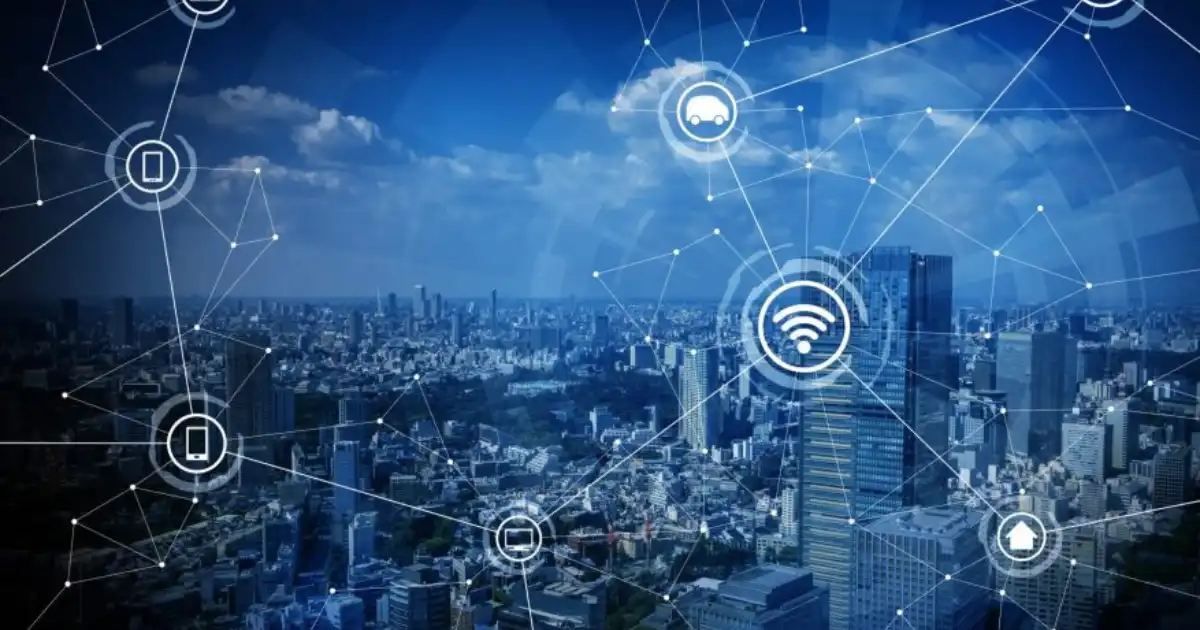
With the help of AIoT innovations, cities today have the potential to transform into anything from intelligent infrastructures to eco-efficient systems. Imagine a traffic system with unclogged flow and an energy consuming system that works to conserve energy, while the citizens are fully connected and having their unparalleled needs met. The integration of AI and The Internet of Things in smart cities helps to develop a constellation of devices that can learn, adjust, and evolve in real-time; this is possible because of the previously cited innovations. These innovations will change the quality of life of every citizen for the better, making it easier for us to perform daily functions.
Have you ever thought how great it would be if every streetlight could change depending on the traffic volume which necessitated it, or if overflowing wast bins could be seen to before overflowing? While these ideas might seem far fetched, they are very much within reach. All it takes is a little more work and development in the Artificial Intelligence and IoT field. AIoT innovations will advance sustainable living, making life futuristic, all at the same time while controlling the population density of urban regions and enhancing ecological issues. If you are interested in learning more about the technologies that are changing urban life, “7 AIoT Innovations Powering the Next Generation Smart Cities” will detail on the ways which are making the world thoroughly intelligent, green, and connected.
Systems for Managing Traffic that are Powered by AI
Traffic congestion is one of the most challenging issues in urban areas. These issues cause commutes to take more time than they should, create pollution, and damage the economy. AIoT Innovations is progressing in these areas.
How Does This Work
Cameras, sensors, and IoT systems equipped traffic signals incorporate AI technology to observe traffic conditions in real time. These systems forecast traffic jams and, in anticipation of them, change the way vehicles are allowed to move through the intersection.
Real-World Example
Singapore and Los Angeles are already implementing AIoT Innovations aimed at monitoring and forecasting traffic jams bottlenecks. AI traffic lights automatically adapt the duration of the red and green signals which minimizes stopping time between light cycles.
Benefits
- Enhancement of safety due to automated traffic monitoring
- Lower consumption of gasoline and emissions
- Reduction of travel time
Power Distribution Systems for Intelligent and Sustainable Energy Grids
As people demand more power, the need for advanced energy distribution systems in cities increases. AIoT Innovations is improving adaptability and intelligence in power grids.
How Does This Work
An AI system oversees the management of energy by monitoring usage and predicting peak demand. The grid is equipped with IoT sensors that monitor real time power usage, allowing for automatic balancing of power loads.
Real-World Example
In Amsterdam, AI is used in smart grids for intelligent energy distribution with the aim of reducing the use of oil or gas through the integration of renewable sources like solar panels and wind turbines.
Advantages
- Use of resources is maximized while waste is minimized.
- Decreased pricing for consumers.
- Better incorporation of renewable energy sources.
AIoT-Powered Public Safety and Surveillance
Keeping the public safe is a central concern for cities as well. Indeed AIoT Innovations are helping streamline policing and emergency service response to be more effective and efficient.
How It Works
IoT smart streetlights and emergency systems coupled with AI surveillance cameras have the ability to analyze video data, recognizing potential threats while monitoring the surrounding areas with live video feeds. The aforementioned IoT devices also provide alerts to responsible bodies when something suspicious is detected.
Real-World Example
London has implemented AI surveillance cameras that monitor for criminal activity throughout the city. The implementation of these systems has allowed police to respond to calls in less time as their responsive capabilities have been enhanced.
Benefits
- More timely assistance in emergencies.
- Reduction of crime and improvement in security levels.
- Threats are recognized with the help of AI in a matter of seconds.
Smart Waste Management for Cleaner Cities
AIoT Innovations are tackling urban waste problems caused due to ineffective waste disposal methods as well as harzardous environmental impacts.
How It Works
AI and IoT smart bins report on their fill levels to collection agencies. Idle collection vehicles are able to optimize their travel plans to negate extra fuel expenditure and excessive operational fee requirements.
Real-World Example
Barcelona employs The Intelligent Waste Collection System powered by AI to lessen the frequency of emptying waste containers without wasting time, money, and resources on leftover garbage to complete the process more promptly.
Benefits
- Routes for waste collection have been optimized
- Reduced pollution and cost of operations
- Urban areas are cleaner and healthier
A IoT Based Smart Water Management System
Managing water usage is becoming critical and AIoT Innovations are helping cities manage water distribution effectively.
How It Works
IoT powered devices monitor the amount of water used, identify any leaks, and adjust supply automatically in real-time.
Example In Real Life
Smart water meters with AI technology are installed in cities like Sydney so that consumption patterns and leakage results can be recorded. In turn the need for cost induction and wated is reduced.
Benefits
- Effective managment of water resources
- Decreased water wastage due to automated leak detection
- Cost reduction for the general public and government
AIoT Integrated Smart Buildings and Infrastructure
Smart buildings are emerging in cities and using AIoT Innovations to boost energy use and security.
How It Works
Modern buildings have integrated systems powered by AI that manage heating, cooling, lighting, and security to ensure energy use is optimized whilst achieving maximum comfort.
Example In Real Life
The AI driven Edge building located in Amsterdam is one of the world’s smartest too, made in turns of integrating lighting, temperature, and devided energy proficient AI driven IoT sensors.
Benefits Reductions – Costs and Value
- Unparalleled comfort and convenience for occupants to achieve thier day to day tasks.
- Advanced Eased Identity Verification Level Security Access
Autonomous Public Transportation Using AIoT Technology
Public National Transport is vital of AIoT Cities. Innovations of AIoT are remodeling the way citizens commute to and from work.
How It Works
Buses, trains, and trams with AI technologies incorporated evaluate needed seats and plan the routes and stare time. Self-driving vehicles use IoT and AI technologies for navigation within city traffic.
Real-World Example
Dubai is currently piloting self-driving taxis that have the ability to drive without the assistance of a human using AIoT.
Benefits
- Minimized traffic jams due to public transport
- Advanced service provision and efficiency ratio
- Reduced pollution caused by advanced anatomical scheduling
You Might Be Interested In
- Who Has The Best Ai For Patent Management?
- What Is Saas Application Management?
- What Common Mistakes Happen When Building Ai Workflows?
- 7 Free Ai Plagiarism Checks Tested
- How Ai-powered Drone Surveillance Protects?
Conclusion
AIoT Innovations are likely to transform resource management, transportation, sustainability, and security making city living easier AIoT powered. Moreover, considers these top-edge technologies being not only futuristic concept but rather realities to be deployed in different cities around the world to improve the efficiency and decrease the ecological effect.
With the growth of AI and IoT technologies, smart cities will be even more integrated, intelligent, and responsive. Collaboration between Governments, Businesses, and Tech Innovators is required to scale these innovations so that the cities of the future will be able to achieve greater intelligence, safety, and sustainability.
The integration of AIoT innovations is not just another technological advancement, but indeed, the cornerstone of creating advanced urban ecosystems capable of tackling the needs of burgeoning populations while maintaining ecological balance.
FAQs about Aiot Innovations
How and where can you spot AIoT innovations in a city?
AIoT (Artificial Intelligence of Things) transforms everyday urban life, making cities smarter, safer, and just overall efficient. One of the major innovations is AI based traffic management systems. They involve the use of IoT enabled traffic cameras and sensors in combination with AI-powered real-time analytics to manage the traffic flow, anticipate congestion, and make real-time adjustments to traffic lights accordingly. AI can analyze a vast amount of data received from the roads in order to help optimize routes and minimize the waiting time at the junctions, which leads to minimized fuel consumption, and consequently, decreased air pollution, ultimately enhancing the experience of commuting.
AI-powered waste management is one great case in point. Smart bins contain sensors that indicate when a bin is full and automatically alert collection services, thereby minimizing overflow and avoiding unnecessary wasted pickups. IoT devices save time and resources. AI algorithms study waste collection information in order to optimize the fuel expenses of the garbage trucks as well as the time of fuel disposal. AIoT technology is also used in smart safety surveillance systems. Smart cameras equipped with facial recognition software along with behavior analysis recognition can detect suspicious activities and report them immediately into authority systems, helping keep urban regions secure.
What IOT is an example of AI?
AI automation of a smart home system is a popular example of an AI of IOT. Many different kinds of devices are now equipped with smart functionalities and AI integrated, such as the Amazon Alexa, Google Nest or Apple Homekit, smart appliances that and embody the user’s preferences. A good example is the AI thermostat, Nest, it learns how users set their houses temperature and with the current external temperature data modifies the indoor climate in a way that greatly reduces energy usage and therefore electricity bills.
Aside from households, AIoT is important in industry automation and for predictive maintenance. In a manufacturing plant, IoT sensors gather information from machines in real-time, then AI uses this information to predict failures and actually make the machine tools work. The maintenance of production processes before there is a breakdown prevents failures, saves money, and makes work more efficient. In addition, AIoT is revolutionizing the healthcare sector. Medical wearables monitor patient data and AI check for any abnormal vitals and if there is any, alert the medical professionals instantly.
How is Artificial Intelligence integrated in smart cities?
For smart cities, artificial intelligence changes the game as it is used to automate the energy system, transportation, even government services. AI is particularly useful in a modern smart traffic system where AI sensors together with GPS system and CCTV monitors the traffic in real-time. AI algorithms are able to anticipate traffic jams, modify light signals, and suggest other routes to drivers to make the trip less time consuming and better for the environment. AIoT can also be used to help enhance services for buses and trains as AI can automate scheduling, maintenance of services, and the overall riding experience.
Another critical application of AI in smart cities is smart energy management. AI systems optimize the use of server resources to increase the efficiency with which power is distributed and utilized, thus preventing blackouts as well as wasting energy. AI can also dynamically integrate renewable resources while controlling the balances between demand and supply.
In addition, AI enhances public safety and emergency management by monitoring security cameras, social media platforms, and IoT sensors to find possible threats and provides a better response to possible emergency situations. AI chatbots and virtual servants are also being introduced to public administration services so that residents can know what is happening in the city, the schedule of public transport, and emergency notifications in real time.
What does AIoT stand for?
AIoT refers to Artificial Intelligence of Things and represents an integration of Artificial Intelligence (AI) with the Internet of Things (IoT). IoT devices equipped with various sensors, cameras, and smart devices collect huge volumes of data, and it is AI that interprets the data and makes autonomous predictions and decisions. With AIoT, devices will not only perform designated tasks, but they will also learn from numerous inputs and, improve their performance without any human assistance.
This compelling combination is applied in different sectors such as smart cities, industrial automation, healthcare, and retail. AIoT solutions include self-driving cars which use AI to interpret sensor data, AI-enabled medical wearables that monitor patients in real-time, and smart factories which maximize production efficiency. The continuous adoption of AIoT will usher in the era of complete interdependence, where systems self-optimize their processes for improving the standard of living and business automation.
What is the future of AIoT, you ask?
With the integration and advancement of AI, edge computing, and 5G technology, the future of AIoT is incredibly promising. AIoT has the potential to transform industries with systems that work autonomously without any human intervention. In the future, AIoT will be a common phenomenon in smart cities that have the ability to monitor traffic, waste disposal, and public security through AI-enabled integrated systems. Solutions powered by AIoT will enhance pollution management and urban living standards and help governments utilize resources more efficiently.
Furthermore, AIoT will be important in health care, manufacturing, and agriculture. A medical AI device can enhance health monitoring, diagnosis, and treatment through real time monitoring. Smart factories will use AIoT in waste, production, and overall efficiency optimization. In farming, AI drones and IoT sensors will monitor crops, automate irrigation, and predict weather helping farmers achieve higher yields with sustainable farming. The expansion of AIoT will eventually take care of wasteful practices while augmenting intelligence, security, and system efficiency, changing the way technology is integrated in our lives.
