



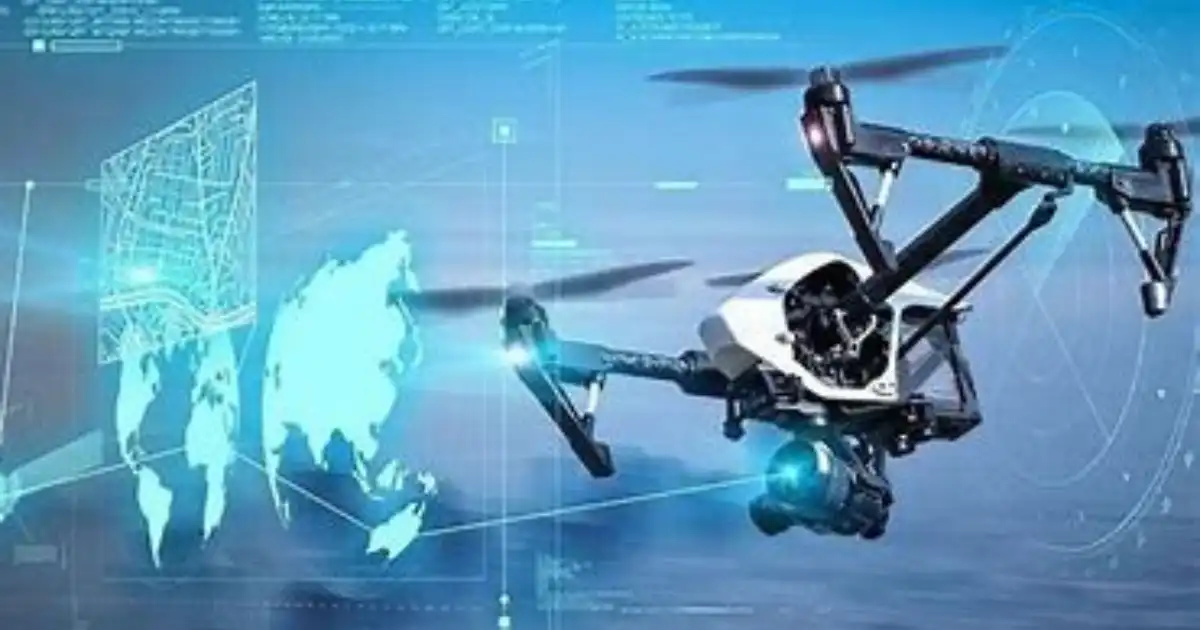
In a world where threats move faster than ever and blind spots can be dangerous, AI-powered drone surveillance emerges as a silent sentinel in the sky. It sees what humans can’t. It reacts before danger escalates. This isn’t science fiction—it’s today’s reality.
From city streets to isolated borders, AI-driven drones are reshaping the way safety is enforced and risks are neutralized. With cutting-edge AI tools, these airborne guardians are not just flying cameras—they’re intelligent, decision-making systems trained to detect anomalies, follow targets, and alert authorities within seconds.
Imagine drones that can scan a massive crowd in real time and instantly detect suspicious activity. Or machines that can monitor forests for illegal logging without rest. These aren’t just upgrades—they’re game-changers. The integration of AI tools into drone surveillance means fewer errors, quicker response times, and smarter protection.
Whether it’s safeguarding critical infrastructure or monitoring disaster zones, AI-powered drones are redefining vigilance. No more delays. No more guesswork. Just intelligent eyes in the sky—working round the clock. It’s time to understand how this fusion of technology and security is protecting what matters most.
What Is AI-Powered Drone Surveillance?
AI-powered Drone surveillance combines unmanned aerial vehicles (UAVs) with artificial intelligence to monitor, track, and analyze areas in real-time.
Unlike traditional drones that rely on human operators for navigation and analysis, these drones are autonomous. They can fly pre-programmed routes, avoid obstacles, and analyze data on the fly.
In simple terms:
They don’t just see — they think.
Key Features:
-
Real-time object detection
-
Thermal imaging
-
Automated decision-making
-
Pattern recognition
These smart systems can even flag unusual behavior, making them perfect for everything from disaster response to industrial inspections.
How AI and Drones Work Together
The Hardware: Drones
A drone, at its core, is a flying machine. But modern drones are equipped with:
-
Cameras (HD, thermal, night vision)
-
Sensors (GPS, LIDAR, infrared)
-
Communication tools (5G, satellite links)
-
Flight controllers and stabilizers
The Brain: Artificial Intelligence
Here’s where the real magic happens. AI gives drones the power to:
-
Detect and track objects without human input
-
Learn from past missions using machine learning algorithms
-
Make decisions in real time, like changing flight paths to avoid a threat
-
Filter massive amounts of data and only report relevant details
Together, the drone becomes more than a flying camera — it becomes an autonomous surveillance system.
Key Applications of AI-powered Drone Surveillance
1. Law Enforcement and Crime Prevention
Police forces use AI-powered Drone surveillance to:
-
Monitor high-crime neighborhoods
-
Track suspects without risking officers
-
Record evidence in real-time
-
Analyze behavior patterns in crowds
In events like concerts or protests, drones can identify suspicious movements before violence erupts, alerting teams on the ground.
2. Border Security
Countries use AI drones to:
-
Detect illegal crossings
-
Identify smuggling routes
-
Monitor remote or mountainous areas where humans can’t patrol
They can cover miles of territory in minutes, scan vehicles for heat signatures, and use AI to distinguish between animals and humans.
3. Environmental Protection
In forested areas, AI-powered Drone systems are used to:
-
Detect wildfires by analyzing smoke and heat
-
Monitor animal populations
-
Prevent illegal deforestation
-
Survey disaster-struck zones for search-and-rescue
AI can analyze weather patterns, vegetation health, and movement trends, giving environmentalists a powerful new tool.
4. Industrial and Infrastructure Surveillance
Industries rely on drones for:
-
Inspecting power lines, pipelines, and wind turbines
-
Identifying gas leaks or overheating equipment
-
Avoiding downtime by catching issues early
Instead of sending workers into dangerous areas, companies can use AI-powered Drone surveillance to scan and assess safely and efficiently.
5. Agriculture and Farming
Smart drones help:
-
Monitor crop health
-
Spot pest infestations
-
Measure soil conditions
-
Analyze irrigation effectiveness
Farmers can make data-driven decisions about fertilizer use, harvesting times, and water consumption.
6. Urban Planning and Smart Cities
Governments use AI drones to:
-
Monitor traffic flow
-
Assess construction zones
-
Plan roads, utilities, and emergency routes
-
Enforce building safety codes
They become an essential part of city management systems.
Benefits of AI-Powered Drone Surveillance
Speed and Efficiency
Drones can scan large areas in minutes, while AI processes the information instantly. What used to take teams days or weeks is now done in real-time.
Reduced Human Risk
Whether it’s inspecting a damaged building or patrolling a dangerous border, AI-powered Drone systems keep people out of harm’s way.
Cost-Effective
Although initial investment may be high, the long-term savings on manpower, safety equipment, and delays are substantial.
Real-time Intelligence
AI allows drones to respond as events unfold, not hours later. From active crime scenes to natural disasters, the ability to react in real time saves lives.
Scalability and Flexibility
Need to monitor a city? A single road? A field? The same system can be scaled up or down based on needs — from one drone to hundreds working together.
Challenges and Ethical Concerns
Despite the clear benefits, AI-powered Drone surveillance raises valid concerns.
Privacy Issues
Are drones watching too much? Critics worry about:
-
Constant surveillance
-
Facial recognition abuse
-
Tracking innocent citizens
Transparency and regulation are key to preventing misuse.
Data Security
If these drones are hacked, sensitive data or live feeds could fall into the wrong hands. Encryption and cybersecurity measures are essential.
Dependence on AI
What if the AI makes a wrong decision? While powerful, AI isn’t infallible. Relying too heavily on automated decision-making can lead to unintended consequences.
Legal Framework
Who’s responsible when things go wrong? Many countries are still crafting laws around drone surveillance. It’s vital to ensure accountability and oversight.
Future Trends in AI-powered Drone Technology
Swarm Drones
Imagine dozens or even hundreds of drones working in harmony.
Swarm technology allows:
-
Massive area coverage
-
Coordinated data analysis
-
Complex task management (search and rescue, firefighting)
Edge AI and Onboard Processing
Soon, drones won’t need to send data to the cloud. AI chips onboard will:
-
Process data in real time
-
Make instant decisions
-
Improve responsiveness and reduce lag
Hybrid Power Systems
With solar, wind, or hydrogen fuel, drones will fly longer and farther. This means wider surveillance coverage with fewer recharges.
Integration with Other Systems
AI-powered Drone technology will soon link with:
-
Police databases
-
Emergency response systems
-
Smart city grids
-
Traffic control and navigation systems
The result? Seamless, automated safety management.
A Comprehensive Guide to Setting Up Your Own System
So, how can your business, community, or agency adopt AI-powered Drone surveillance? Here’s a step-by-step guide.
Step 1: Define Objectives
What do you need?
-
Crime prevention
-
Environmental monitoring
-
Infrastructure inspection
Clearly define your surveillance goals.
Step 2: Choose the Right Drone Hardware
Look for drones with:
-
High-resolution and thermal cameras
-
Long battery life or hybrid power
-
Obstacle avoidance
-
Weather resistance
Step 3: Integrate AI Capabilities
Options include:
-
Built-in AI processors
-
Cloud-based AI systems
-
Custom ML models for facial or object recognition
Choose based on your data needs and privacy constraints.
Step 4: Ensure Compliance
Consult legal experts to:
-
Understand local drone laws
-
Respect privacy rights
-
Register drones and flight paths
-
Inform local communities
Step 5: Train Operators
Even autonomous systems need:
-
Trained technicians
-
Data analysts
-
Emergency override protocols
Regular drills and updates are critical.
Step 6: Set Up Monitoring and Response Systems
-
Live dashboards
-
Automated alerts
-
Integration with emergency or law enforcement teams
Step 7: Maintain and Update Regularly
-
Calibrate sensors
-
Clean cameras
-
Update AI software
-
Conduct safety checks
Maintenance ensures longevity and reliability.
You Might Be Interested In
- What Common Mistakes Happen When Building Ai Workflows?
- How To Write Cover Letters With Ai?
- What Makes Ai Chatbot Automation Effective?
- What CPUS Are Compatible With a MSI Mag B550 Tomahawk?
- What Are The 7 Steps Of Machine Learning?
- How To Share Video With Ai Assistant For Analysis?
- AI Agents That Fix Bugs: Hype or the Next Big Thing?
- 10 Ai-powered Fraud Detection Strategies Banks Love
- What Risks Are Involved In Ai Generated Content?
- What Challenges Occur When Implementing Ai Automation?
Conclusion
In a world where speed, accuracy, and intelligence define security success, AI-powered Drone surveillance stands at the forefront of innovation. These advanced systems offer more than just real-time visuals — they deliver powerful insights, proactive monitoring, and enhanced safety for communities, industries, and the environment. From preventing crimes and securing borders to monitoring wildfires and inspecting infrastructure, AI-powered Drone technology has redefined what it means to “keep watch.”
As AI continues to evolve, so will the capabilities of these drones. We’re entering a new era where machines can think, act, and even predict with minimal human intervention. The fusion of artificial intelligence and aerial technology is no longer just about surveillance — it’s about strategic, intelligent protection at every level of society. By embracing this technology and pairing it with ethical oversight and strong legal frameworks, we unlock a safer, smarter future where threats are not only observed but neutralized before they escalate.
The future of surveillance isn’t on the ground — it’s in the sky. And it’s being led by AI-powered Drone systems that think faster, respond smarter, and protect better.
FAQs about AI-powered Drone
What is the AI-powered drone surveillance system?
An AI-powered drone surveillance system is a type of technology where drones are combined with artificial intelligence (AI) to monitor, record, and analyze activities or environments from the sky. These drones are not just remote-controlled flying machines—they have built-in AI software that allows them to recognize objects, track movements, detect unusual behavior, and make decisions without needing constant human input. For example, a drone might automatically follow a suspicious vehicle or alert authorities if it spots something unusual in a restricted area.
These systems are often used for security, law enforcement, search and rescue, traffic monitoring, and even wildlife protection. The AI makes the drone smarter by helping it understand what it “sees” through its camera and sensors. This means it can process information in real time and respond quickly, making surveillance more efficient and less dependent on human operators.
What are the advantages of AI-powered drone systems?
AI-powered drone systems offer several major benefits. One of the biggest advantages is automation. Instead of needing a person to constantly control the drone, the AI allows it to fly, scan areas, recognize faces, identify objects, and even avoid obstacles on its own. This makes operations faster, safer, and more reliable, especially in dangerous or hard-to-reach places.
Another benefit is real-time decision-making. AI helps drones process information quickly, so they can react to situations immediately. For example, in a security setting, if a drone spots someone entering a restricted area, it can send an alert right away. These drones can also collect large amounts of data and analyze it efficiently, saving time and resources. Overall, AI makes drone systems smarter, more useful, and capable of doing complex tasks that would be hard or impossible for human operators alone.
How is artificial intelligence applied to drone control?
Artificial intelligence is used in drone control to help the drone make smart decisions while flying. Instead of relying only on a person with a remote, AI allows the drone to fly on its own, follow pre-set routes, detect obstacles, and even change its path if something unexpected happens. This is possible through machine learning and computer vision, which help the drone understand its surroundings and act accordingly.
For example, AI helps drones recognize objects like cars, people, or buildings using their cameras. They can also follow a target, avoid trees or power lines, and land safely. Some drones are even trained to patrol specific areas or map out environments. With AI, the drone becomes more than just a flying camera—it becomes an intelligent tool that can think and act on its own.
How can drones be used for surveillance?
Drones can be used for surveillance by flying over an area and using their cameras and sensors to watch and record what’s happening. They can capture live video, take high-quality pictures, and monitor movement from above. This is useful in many situations like guarding property, managing crowds, monitoring traffic, or even helping during emergencies like floods or wildfires.
Surveillance drones can reach places that are hard for humans to access, such as rooftops, forests, or dangerous zones. They can also cover large areas quickly and quietly. When paired with AI, they become even more effective because they can automatically detect suspicious behavior, recognize faces or license plates, and alert authorities. This makes drones a powerful tool for both public safety and private security.
Can you use a drone for surveillance?
Yes, you can use a drone for surveillance, but there are rules and laws you need to follow. Drones can be very helpful for keeping an eye on property, monitoring large events, or checking on remote areas. Many businesses, security teams, and even farmers use drones to watch over crops, equipment, or buildings. The drone’s camera allows you to see what’s happening in real time from the sky, often with high detail.
However, it’s important to remember that privacy laws vary depending on where you live. In many places, you can’t fly a drone over someone else’s private property without permission, and you may need special licenses for commercial use. Always make sure to follow local rules so you don’t invade anyone’s privacy or break the law while using a drone for surveillance.
