



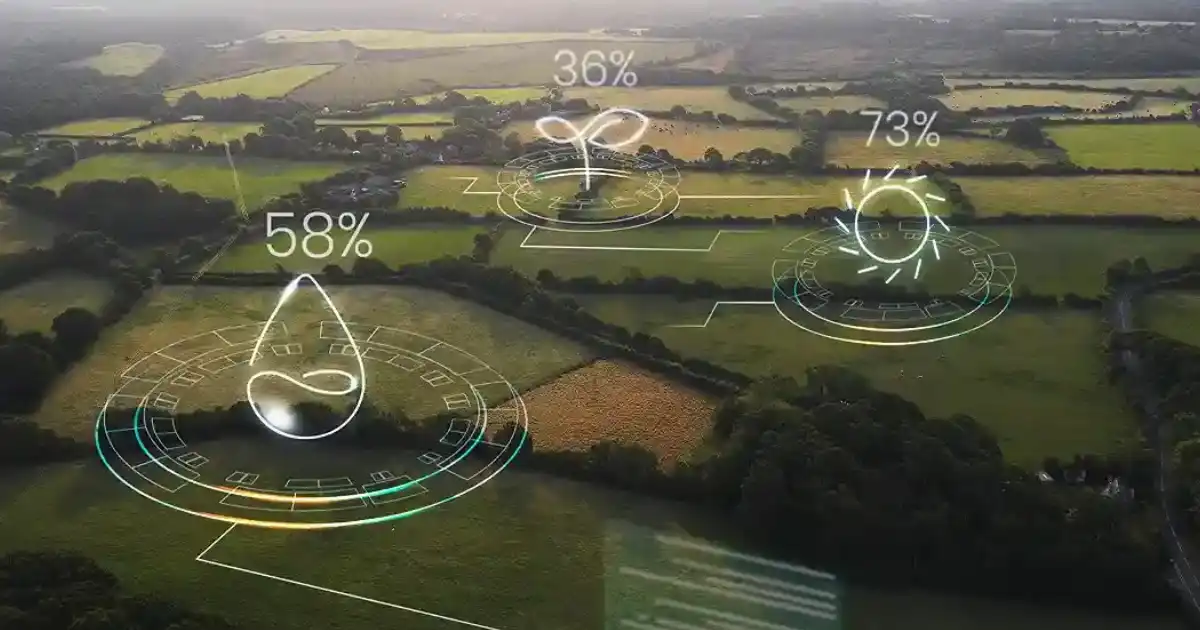
AI feels invisible. You type a prompt, get an answer, and move on. It feels clean, effortless, almost free. But behind that smooth experience is a very physical system running nonstop in massive data centers.
That is where the controversy starts.Is Google Ai Bad For The Environment?
People are asking a simple question: is Google AI quietly becoming an environmental problem?
Some say it is a necessary evolution and already becoming more efficient. Others argue it is scaling faster than we can manage, quietly increasing energy use, water consumption, and carbon emissions.
In this guide, I will break it down the way it actually works in the real world. No hype, no fear-mongering. Just a practical look at what Google AI does, how much it costs environmentally, and whether it is truly a problem or just a misunderstood one.
What Is Google AI and Why Does It Use So Much Energy?
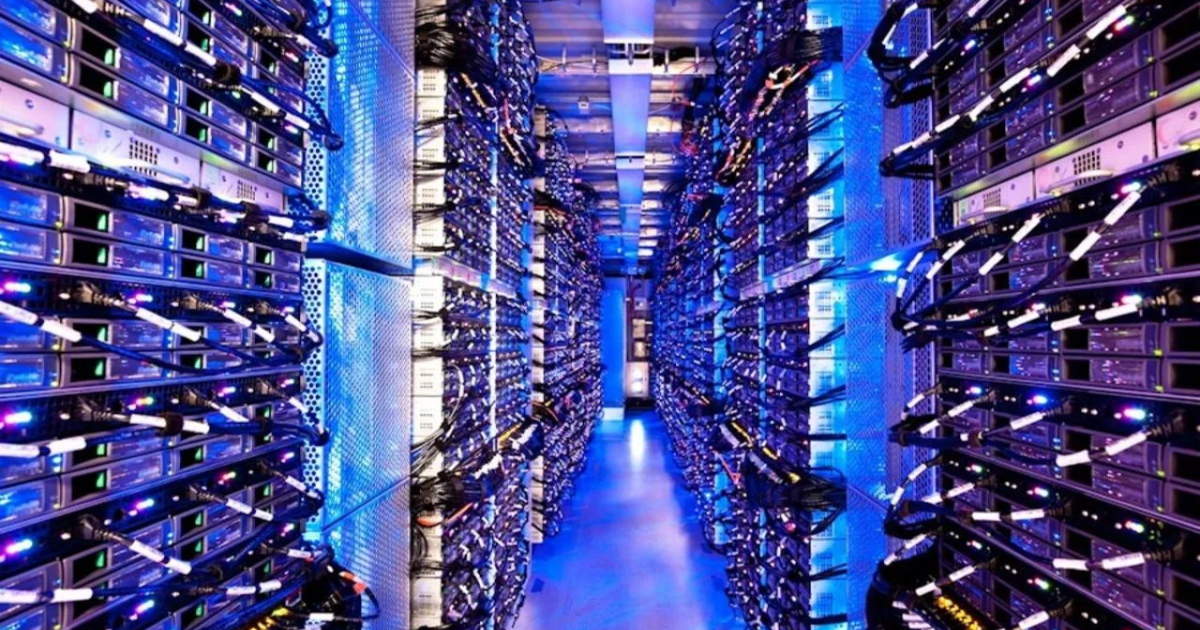
At a basic level, Google AI is just software running on very powerful computers. But the key detail people miss is this: those computers are not normal laptops or servers. They are specialized machines packed into huge data centers.
Think of it like this. If your phone is a bicycle, AI training systems are cargo ships.
There are two main phases:
Training
is when the AI learns. This is extremely energy-intensive. It can take weeks or months of nonstop computation using thousands of GPUs or TPUs.
Inference
is when you ask a question and get a response. This is cheaper per request but still heavier than a typical Google search.
Now imagine millions or billions of these requests every day.
Data centers consume so much power because they are running at high capacity all the time. Not just computing, but also cooling. These machines generate serious heat, and keeping them stable requires constant airflow, water cooling, and energy.
From the outside, AI feels like software. In reality, it behaves more like an industrial system.
The Environmental Impact of Google AI
Energy Consumption of Data Centers
Data centers are the backbone of AI. They run 24 hours a day, seven days a week. Unlike factories, they do not shut down overnight.
A single large data center can use as much electricity as a small city. And Google operates many of them globally.
AI increases that demand significantly. Traditional web search is relatively lightweight. AI queries require more computation per request, which means more electricity.
In practice, this means energy demand scales with usage. More users, more prompts, more energy.
Efficiency improvements exist, but they often get outpaced by demand growth.
Carbon Emissions and Climate Impact
The carbon footprint depends heavily on where the energy comes from.
If a data center runs on renewable energy, the impact is lower. If it relies on fossil fuels, emissions rise quickly.
Google has invested heavily in renewable energy, but here is the catch. Renewable energy is not always available 24/7 in every location. When demand spikes, grids often fall back on natural gas or coal.
From what I have seen in real infrastructure setups, companies aim for clean energy, but they cannot guarantee it at every moment.
So while Google may report strong sustainability numbers, real-time usage can still involve carbon-heavy energy sources.
That gap between reported averages and actual usage is something most people do not realize.
Water Usage
This is the part most people never think about.
Cooling data centers requires water. A lot of it.
When servers heat up, they need cooling systems to prevent damage. Many facilities use evaporative cooling, which consumes water continuously.
In some regions, especially hot or dry ones, this becomes a serious issue.
I have seen cases where communities raise concerns because local water resources are being used to cool data centers instead of supporting agriculture or households.
It is not always visible, but it is very real.
How Much Energy Does a Google AI Query Use?

A single AI query does not use a massive amount of energy on its own. It might be comparable to charging your phone for a few minutes.
But compared to a traditional Google search, it is noticeably higher.
A standard search is lightweight. It mostly retrieves indexed data. AI has to generate responses, which means running complex models in real time.
If one query uses slightly more energy, it does not matter much. But if millions of people start using AI daily instead of search, the total energy demand rises sharply.
That is the real issue.
In real systems, we do not worry about single actions. We worry about aggregate load.
Why AI’s Environmental Impact Is Increasing So Fast
The speed of growth is what makes this situation different.
AI adoption is exploding. People are using it for writing, coding, studying, customer support, and more.
At the same time, models are getting larger. More parameters, more computation, more energy.
There is also a competitive race. Companies are pushing for faster, smarter, more capable systems. That often means bigger infrastructure.
In theory, efficiency improves over time. In reality, usage grows even faster.
From what I have seen in tech systems, demand almost always wins.
Is Google AI Really Bad for the Environment? (The Debate)
Google’s Perspective
Google argues that AI can be sustainable and even beneficial.
They have invested heavily in renewable energy, efficient hardware, and optimized data center design. Their newer facilities are far more efficient than older ones.
They also use custom chips like TPUs that perform AI tasks more efficiently than general-purpose hardware.
From a practical standpoint, they are not ignoring the problem. They are actively trying to reduce the environmental cost.
Google also claims that AI can help optimize energy grids, reduce waste, and improve climate modeling.
So their position is clear: yes, AI uses energy, but it can also drive solutions that offset that impact.
Critics’ Perspective
They argue that even if efficiency improves, total consumption is still rising. More users and bigger models cancel out efficiency gains.
Another concern is reporting. Sustainability reports often show averages or offsets, but they do not always reflect real-time energy sources or peak usage.
There is also concern about water use and local environmental impact, especially in areas where resources are limited.
From a practical perspective, critics are less concerned with intentions and more concerned with outcomes.
If total energy use keeps rising, efficiency alone is not enough.
The Bigger Problem: Scale vs Efficiency

There is a concept called Jevons paradox. It basically means that when something becomes more efficient, people use more of it.
You see it everywhere. Cars get more fuel-efficient, but people drive more. Data gets cheaper, but we store more of it.
AI is following the same pattern. Even if Google makes AI twice as efficient, usage might grow three or four times.
- So total energy consumption still increases.
- This is the part most articles miss. Efficiency does not automatically mean lower impact.
- In real systems, demand tends to expand until it fills the available capacity.
Other Environmental Impacts of AI You Should Know
There is also e-waste. AI hardware becomes outdated quickly. GPUs and specialized chips have short upgrade cycles, and replacing them generates electronic waste.
Then there is the hardware lifecycle. Manufacturing chips requires rare materials, complex supply chains, and energy-intensive processes.
Mining for materials like lithium and cobalt has its own environmental impact.
In practice, the environmental footprint of AI starts long before the data center and continues after the hardware is retired. Most discussions ignore this lifecycle completely.
Can Google AI Become Sustainable?
Google is already pushing toward carbon-free energy, more efficient cooling systems, and better hardware design.
- But the challenge is not just technology. It is behavior and scale.
- As long as demand keeps growing rapidly, sustainability becomes a moving target.
- In my experience, the most realistic outcome is partial sustainability. Reduced impact per unit, but increasing total usage.
- The real solution would require both efficiency and smarter usage patterns.
You Might Be Interested In
- What Does Ais Stand For In School?
- Is Google Bard Ai Better Than ChatGPT?
- How To Cite Sources With Ai Correctly?
- What Is Business Process Automation With Ai?
- How Do I Make An Ai Voice Model For Perdita?
Conclusion
Google AI is not inherently bad for the environment, but it is not neutral either. It consumes significant energy, uses water, and contributes to carbon emissions, especially at large scale. The real issue is not a single query or even a single data center. It is the rapid growth of usage combined with the physical limits of infrastructure.
Looking forward, the impact will depend on two things: how efficiently companies can run these systems, and how responsibly people use them. AI is not going away. The question is whether we manage its growth wisely or let scale quietly turn it into a larger environmental burden.
FAQs about Is Google Ai Bad For The Environment?
Is AI worse for the environment than Google Search?
Yes, but the difference needs context to really understand it. A traditional Google search is relatively lightweight because it mostly pulls already indexed information from servers. AI, on the other hand, generates responses on the fly, which requires more computation and therefore more energy. In simple terms, search is like grabbing a book from a shelf, while AI is like writing a new page every time you ask a question.
That said, the real environmental concern is not about one search versus one AI prompt. It is about scale. If billions of people start replacing simple searches with AI interactions, the total energy demand increases significantly. So while AI is heavier than search, it only becomes a serious environmental issue when usage grows at massive scale.
How much energy does one AI query use?
One AI query uses a small amount of energy on its own. In practical terms, it is often compared to charging a smartphone for a few minutes or running a small household appliance briefly. The exact amount varies depending on the model size, how complex the request is, and how efficient the data center is.
The key thing most people misunderstand is that individual queries are not the problem. The real issue comes from millions or even billions of queries happening every day. When you multiply a small energy cost by massive global usage, it adds up quickly. That is why discussions around AI and the environment focus more on total demand rather than single interactions.
Why do AI data centers use water?
AI data centers use water mainly for cooling systems. When powerful servers run continuously, they generate a lot of heat. To keep them operating safely and efficiently, cooling systems remove that heat, and many of these systems rely on water evaporation to do the job effectively.
In real-world operations, this can become a hidden environmental cost. In cooler climates, the impact might be manageable, but in hotter or water-scarce regions, it raises concerns. Local communities sometimes push back because the same water resources could be needed for agriculture or daily use. So while water cooling is technically efficient, it is not always environmentally neutral depending on location.
Is Google trying to reduce AI’s environmental impact?
Yes, and to be fair, Google is one of the more proactive companies in this area. They invest heavily in renewable energy, design more efficient data centers, and build custom hardware like TPUs that perform AI tasks using less energy compared to traditional systems. These improvements do make a measurable difference in reducing energy per operation.
However, there is a practical limitation. Even as systems become more efficient, demand for AI is growing faster. That means total energy usage can still increase despite better technology. So while Google is clearly working to reduce the impact, the overall outcome depends on whether efficiency improvements can keep up with global usage growth.
Can AI help the environment?
Yes, AI can absolutely contribute to environmental solutions when used correctly. It is already being used to optimize energy grids, predict weather patterns more accurately, reduce waste in supply chains, and improve efficiency in industries like agriculture and transportation. In these cases, AI can help reduce overall resource consumption.
But there is an important trade-off. The same systems that help optimize the environment also consume energy and resources themselves. So AI is not automatically a net positive. Whether it helps or harms depends on how it is applied and how responsibly it is scaled. In practice, AI has the potential to be part of the solution, but it is not a guaranteed fix on its own.
