



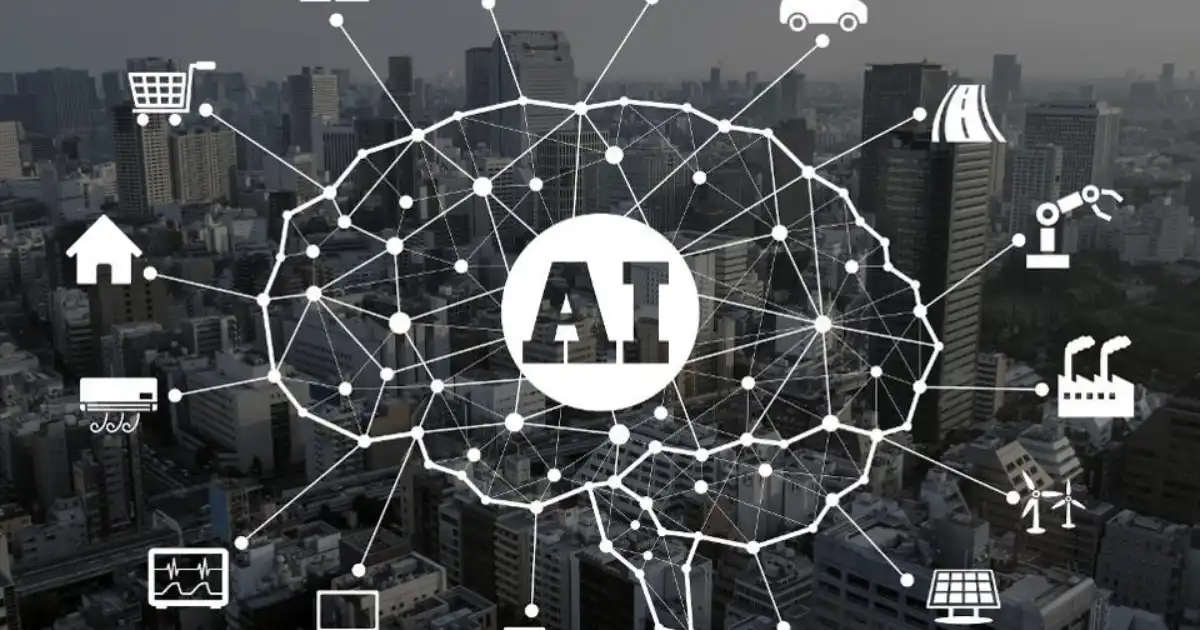
Artificial intelligence has reached the point where people interact with it every day without even thinking about it. Recommendation engines decide what shows up on streaming platforms, fraud detection systems monitor banking activity in real time, AI chatbots answer customer questions, and machine learning models quietly influence decisions inside healthcare, logistics, hiring, advertising, and transportation.
But once AI moves beyond demos and benchmark scores, one question becomes far more important than flashy headlines: How Accurate Are Ai Systems In Real World Applications?
How accurate is it when real people actually use it?
That question matters because real-world environments are messy. Users behave unpredictably. Data changes constantly. Systems encounter situations they were never trained for. And unlike controlled lab conditions, production systems have to survive noise, ambiguity, missing information, and edge cases every single day.
In my experience, this is where the public conversation around AI often becomes disconnected from reality. People hear phrases like “99% accurate” and assume the problem is solved. In practice, accuracy is usually far more conditional than that.
A model can perform brilliantly in one environment and struggle badly in another. The same AI system that works perfectly during testing can suddenly fail when exposed to real customer behavior, unusual inputs, or changing conditions.
That does not mean AI is ineffective. It means real-world AI performance is more nuanced than marketing claims usually suggest.
What Accuracy Really Means In AI
Accuracy Is Not Just “Right Or Wrong”
Most people think AI accuracy simply means how often a system gives the correct answer. Technically, that is partially true, but the real picture is more complicated.
In machine learning, accuracy often refers to the percentage of predictions a model gets correct on a test dataset. But in production systems, raw accuracy alone rarely tells the full story.
For example, a spam detection system with 98% accuracy sounds excellent until you realize millions of emails are being processed daily. That remaining 2% can still create huge operational problems if important business emails get blocked.
Similarly, a healthcare AI that detects disease correctly 95% of the time may still be risky if the missed 5% contains severe or life-threatening cases.
What people usually miss is that the impact of errors matters just as much as the number of errors.
Different Applications Need Different Kinds Of Accuracy
Not all AI systems are judged the same way.
A movie recommendation engine can survive occasional mistakes because entertainment preferences are subjective anyway. Nobody panics if Netflix recommends a bad action movie.
But autonomous vehicles, financial fraud systems, or medical diagnosis tools operate under very different expectations. Small mistakes can have serious consequences.
That is why AI engineers rarely rely on a single performance metric. Real systems are evaluated using things like precision, recall, false positive rates, false negatives, robustness, confidence calibration, and consistency under changing conditions.
In practice, the question is usually not “Is this AI accurate?”
The better question is:
“Accurate under what conditions, and what happens when it fails?”
AI Accuracy In Controlled Environments Vs Real-World Systems
Lab Performance Often Looks Better Than Reality
This is one of the biggest gaps in AI.
In controlled environments, models are tested on curated datasets. Images are cleaner. Labels are more accurate. Inputs are predictable. Noise is reduced.
Real-world environments are nothing like that.
Users type incomplete sentences. Cameras capture blurry images. Sensors fail. Data pipelines break. Customer behavior changes. Unexpected situations appear constantly.
I’ve seen customer service chatbots perform extremely well during internal testing and then struggle badly once actual users arrived. Internal testers usually ask clean, well-structured questions. Real customers type things like:
“payment disappeared pls help”
or
“why app broken again???”
That difference matters more than most people realize.
The Real World Introduces Constant Variability
Machine learning systems are heavily dependent on the data they were trained on. The problem is that production environments evolve continuously.
Economic conditions change. Language changes. Fraud patterns evolve. Consumer behavior shifts. New devices appear. Regulations change. Seasonal trends emerge.
The model that worked six months ago may quietly become less reliable over time.
This phenomenon is often called model drift, and it is one of the biggest operational challenges in real-world AI systems.
How AI Accuracy Behaves In Different Real-World Applications
AI In Healthcare
High Accuracy Does Not Mean Full Automation
Healthcare AI systems can perform extremely well in narrow tasks like medical image analysis. Some models can identify tumors, fractures, or retinal disease with impressive accuracy under controlled conditions.
But hospitals quickly discover that real healthcare environments are more complicated.
Patient populations vary. Imaging equipment differs across hospitals. Scan quality changes. Rare diseases appear infrequently in training data. Human biology itself is incredibly diverse.
A model trained mainly on data from one country or demographic group may perform worse somewhere else.
This is why most successful healthcare AI systems work as decision-support tools rather than fully autonomous doctors. Human oversight still matters heavily.
AI In Finance
Fraud Detection Is A Moving Target
Financial AI systems are often highly effective because they can analyze massive transaction volumes far faster than humans.
The challenge is that attackers adapt.
The moment fraudsters learn what triggers the model, they start modifying their behavior. That means fraud detection systems are constantly fighting evolving patterns.
In production environments, maintaining accuracy becomes an ongoing process rather than a one-time achievement.
A fraud detection model can slowly become less effective without anyone immediately noticing because the environment itself keeps changing.
AI In Autonomous Systems
Edge Cases Become The Real Problem
Self-driving systems reveal one of AI’s biggest weaknesses: unusual situations.
Under normal conditions, autonomous systems can perform remarkably well. The real difficulty appears when the environment becomes unpredictable.
Temporary road signs, unusual weather reflections, emergency vehicles, unexpected pedestrian behavior, construction zones, or confusing lane markings can all create problems.
Humans are surprisingly good at improvising around chaos. AI systems are usually much narrower in how they interpret the world.
The issue is not average-case performance. It is rare-case reliability.
AI Chatbots And Language Models
Confidence Can Be Misleading
Modern AI chat systems are incredibly impressive compared to earlier generations. But they still make mistakes in ways that humans often underestimate.
The biggest issue is that language models can sound confident even when they are incorrect.
That creates a psychological problem. Fluent language feels trustworthy.
I’ve seen cases where users trusted completely wrong AI-generated explanations simply because the wording sounded polished and authoritative.
Large language models predict statistically likely text patterns. They do not “understand” facts the way humans intuitively imagine understanding.
That distinction matters a lot in real-world deployments.
Recommendation Systems
Perfect Accuracy Is Not Necessary
Recommendation systems operate differently from high-risk AI applications.
Streaming platforms, social media systems, and online stores do not need flawless predictions to be useful. Human preferences are messy and constantly changing anyway.
A recommendation engine can still deliver enormous business value even if many individual recommendations are imperfect.
In fact, some randomness is intentional because platforms want users to discover new content rather than seeing the same type of recommendation forever.
Why AI Systems Fail In Real Environments
Poor Data Quality Creates Major Problems
Most AI failures are actually data failures.
Training datasets often contain missing information, incorrect labels, duplicated examples, outdated behavior patterns, and representation imbalances.
If the underlying data is flawed, the model inherits those flaws.
People sometimes obsess over advanced model architectures while ignoring the fact that weak data quality quietly limits the entire system.
Bias Often Emerges From Historical Data
AI bias is often misunderstood.
Sometimes bias comes from intentional design decisions, but more commonly it emerges because historical data reflects historical human behavior.
If past hiring data contains imbalances, a hiring model may learn those patterns. If facial recognition datasets underrepresent certain demographics, performance may vary across groups.
The model is not forming opinions. It is absorbing statistical patterns from historical examples.
That still creates serious real-world consequences.
Changing Conditions Reduce Reliability
Machine learning models assume future data will resemble past data.
Real life rarely cooperates for very long.
Consumer behavior changes constantly. Economic environments shift. Fraud strategies evolve. Language trends move fast. New technologies introduce new patterns.
This means AI systems often degrade gradually unless they are continuously monitored and retrained.
Edge Cases Expose Weaknesses
The world contains endless weird situations.
Humans handle novelty using reasoning, context, and improvisation. AI systems often struggle outside familiar patterns.
A vision system may correctly identify thousands of normal traffic signs but fail because one sign is partially damaged or covered in graffiti.
A speech model may work well generally but struggle with strong accents or noisy environments.
A moderation system may misunderstand sarcasm, slang, or cultural context.
These failures often look obvious after they happen, which makes them especially frustrating.
Why Lab Results Often Look Better Than Production Results
Benchmarks Reward Optimization
AI benchmarks are useful, but they can create misleading impressions.
Teams naturally optimize models around measurable datasets because benchmark performance is how progress gets evaluated.
But benchmark success does not always translate into production reliability.
The real world introduces ambiguity, noisy data, operational constraints, infrastructure issues, and user behavior patterns that rarely appear in polished research environments.
Demo Conditions Are Usually Ideal
This is another thing people underestimate.
AI demos are often shown under carefully controlled conditions. That does not necessarily mean companies are trying to mislead people. It is simply easier to showcase systems in ideal environments.
Production environments are much harsher.
Real users are unpredictable. Inputs are messy. Infrastructure occasionally fails. Edge cases appear constantly.
That is where the true difficulty of AI deployment begins.
Why Humans Still Matter In AI Systems
Full Automation Is Still Risky In Many Industries
Despite all the hype around autonomous AI, most successful production systems still rely heavily on human oversight.
Humans review uncertain outputs, correct mistakes, handle escalations, label new data, audit predictions, and manage unusual cases.
In my experience, fully autonomous systems are much rarer than people think.
Most real-world AI systems are actually human-AI collaboration systems.
Humans Handle Ambiguity Better
AI is excellent at speed, pattern recognition, consistency, and large-scale analysis.
Humans are still far better at judgment, context awareness, ethics, improvisation, and handling novel situations.
The safest systems usually combine both strengths rather than trying to eliminate humans entirely.
How Companies Improve AI Accuracy Over Time
AI Systems Need Continuous Monitoring
One thing outsiders often miss is how operational AI really is.
Building the initial model is only part of the work. Maintaining reliability over time is often harder.
Production AI systems are constantly monitored for drift, unusual predictions, error spikes, changing user behavior, and degraded performance.
Teams retrain models, refine datasets, improve labels, and redesign pipelines continuously.
Uncertainty Detection Is Becoming More Important
Smarter AI deployments increasingly focus on detecting uncertainty rather than pretending models are always correct.
Many systems now identify low-confidence predictions and route them to humans instead of forcing automation everywhere.
This approach is usually much safer and more practical than assuming AI should operate independently all the time.
The Future Of AI Accuracy In Real-World Applications
AI systems are improving rapidly in reasoning, multimodal understanding, contextual awareness, and long-range consistency.
Retrieval systems, synthetic training data, reinforcement learning, and better monitoring pipelines are all helping improve model reliability.
But the real world will always generate new edge cases faster than benchmarks can fully capture them.
That tension is probably permanent.
AI capability will continue improving. Fully dependable real-world reliability is a much harder problem.
You Might Be Interested In
- Which Local Ai Model Is Best For Homework Help?
- Which Ai Helps Best With Resume Tuning?
- What Is The Difference Between a Data Scientist Vs Data Analyst?
- How To Turn Text Into Formulas With Ai?
- How To Add An Ai Chatbot To Wix?
Conclusion
AI systems are already extremely capable in many real-world applications, but capability and reliability are not the same thing. A model can perform impressively in controlled conditions while still struggling with ambiguity, changing environments, poor data quality, or rare edge cases once deployed at scale.
The most useful way to think about AI accuracy is not asking whether an AI is “smart.” The better question is understanding where it remains dependable, where it becomes fragile, and how humans and machines can work together to reduce failure in real environments.
FAQs
How Accurate Are AI Systems In Real-World Applications?
AI systems can be extremely accurate in some environments and surprisingly unreliable in others. Their performance depends heavily on the quality of data, the stability of the environment, and how predictable the task is. For example, AI performs very well in areas like spam filtering, product recommendations, and pattern detection in structured datasets because those environments are relatively controlled and repetitive.
However, once AI systems face unpredictable human behavior, noisy data, unusual edge cases, or changing real-world conditions, accuracy can drop quickly. In real deployments, companies rarely expect AI to be perfect. Instead, they focus on making systems reliable enough for practical use while reducing serious errors through monitoring, retraining, and human oversight.
Why Do AI Models Perform Worse In The Real World Than In Testing?
AI models are usually trained and tested on curated datasets where the information is cleaner, more balanced, and easier to process. In testing environments, images may have better lighting, text inputs may be grammatically correct, and data labels are often manually verified. Real-world environments are far messier.
Actual users behave unpredictably. Sensors fail. Data changes over time. People type incomplete sentences, upload blurry images, and interact with systems in ways developers did not expect. This creates a gap between benchmark performance and production performance. In my experience, many AI systems look impressive during demos because they are operating under ideal conditions that rarely exist once deployed at scale.
Can AI Systems Ever Become 100% Accurate?
In most real-world applications, probably not. The main reason is that reality itself is unpredictable. Human behavior changes constantly, environments evolve, and edge cases never fully disappear. Even humans are not 100% accurate in decision-making, especially in complex fields like medicine, finance, or driving.
AI systems can absolutely become more reliable over time, and many already outperform humans in narrow tasks. But achieving perfect accuracy across all possible situations is extremely difficult because the world continuously produces new scenarios the system has never seen before. Most practical AI development focuses on reducing critical failures rather than chasing absolute perfection.
Why Is Human Oversight Still Important In AI Systems?
Human oversight remains important because AI systems still struggle with ambiguity, context, ethics, and unusual situations. AI is very good at processing large amounts of data quickly and spotting patterns humans might miss, but it often lacks the deeper reasoning and adaptability people naturally use in unfamiliar situations.
That is why many successful AI deployments operate as human-AI collaboration systems instead of full automation systems. In healthcare, humans review AI-assisted diagnoses. In finance, analysts investigate suspicious transactions flagged by machine learning systems. In customer service, human agents handle complex conversations when chatbots become confused. In practice, human judgment is still one of the most important safeguards against costly AI mistakes.
What Causes AI Systems To Make Mistakes?
Most AI mistakes come from data problems, changing conditions, or situations outside the model’s training experience. If training data contains bias, missing information, poor labeling, or unbalanced representation, the AI system often inherits those weaknesses. Machine learning models are only as strong as the data they learn from.
Another major issue is that real-world environments constantly change. Fraud patterns evolve, language changes, customer behavior shifts, and new edge cases appear over time. AI systems that are not continuously updated can gradually become less reliable. I’ve seen production systems fail not because the original model was bad, but because the world around the model changed faster than the system adapted.
