



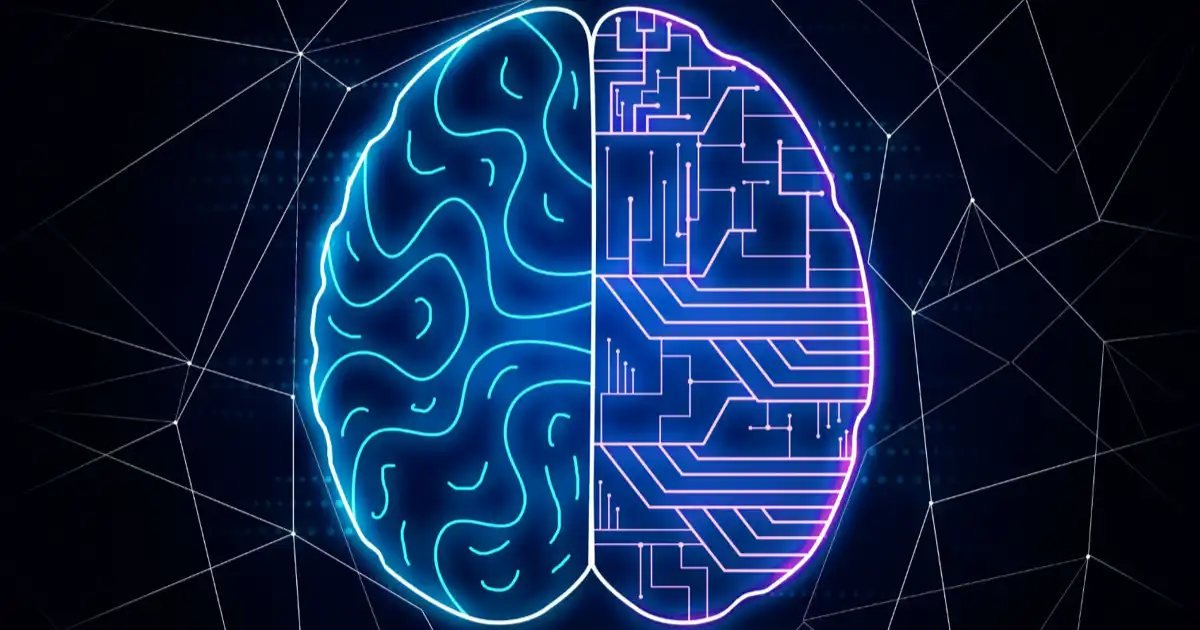
With the ever-changing landscape of machine learning, there is a higher need for advanced hardware to train and deploy AI models. It’s like putting a sports car into quicksand when trying to run complicated algorithms on an outdated system and that’s how complex algorithms are executed on a low-powered system. However, with the recent addition of Nvidia’s GPUs, there has been a striking transformation in the field of ITML. For every single AI innovation, these processors have become invaluable to developers, leading researchers, and to enterprises.
As AI and machine learning take center stage in various industries, the demand for faster, more efficient processing has led to the rise of specialized GPUs. Nvidia, a leader in the field of parallel computing, has continually redefined what’s possible in machine learning. In this guide, we will explore the 10 Nvidia GPUs that have played a pivotal role in transforming machine learning, accelerating research, and enabling real-world applications.
Nvidia: The Power Behind Machine Learning
Nvidia is the leader in machine learning and for good reason. The company’s architecture is workable with structures designed to process parallelized computing processes. When it comes to machine learning, it is vital that multiple operations be performed at once because algorithms require extensive datasets for training. Nvidia GPUs deliver that power and, as a result, have become a necessity for children and parents caring the world over.
Pinnacle of AI Performance – Nvidia A100 Tensor Core GPU
Nvidia has built a powerful reputation in the machine learning space with the introduction of the A100 Tensor Core GPU and its computing task specifications. Its build tailored specifically for deep learning, data analytics, and high-performance computing makes A100 a power horse like no other. The A100 has an astonishing 40GB of high bandwidth memory and Tensor Cores specially designed for machine learning that allows for a significant decrease in the time required to train models and enhance the accuracy of the results.
In both training and inference workloads, the A100 architecture offers unprecedented acceleration of machine learning tasks. From simple neural networks in natural language processing to advanced computer vision or even reinforcement learning, the A100 keeps its crown as the most doable GPU. This piece of technology leads the way of others and serves as the most used in combination with deep learning infrastructure, accommodating a variety of researchers, data scientists, and AI developers.
Nvidia V100 Tensor Core GPU
Works For Data Centers
The Nvidia V100 Tensor Core GPU is and will remain a revolutionary video card serving as the A100 GPU foundation. It single-handedly altered the game for a multitude of machine learning processes from training deep neural networks and executing large scale V100 inferencing. Along with strong bandwidths from 16GB, V100 maintained acceptable pricing which enabled it to become a primary graphic card in academic institutions and enterprise data centers.
In contrast with earlier generations, the V100 GPU serves the most strenuous tasks when it comes to deep learning and provides dramatic acceleration. It is also considered to be the Swiss army knife for machine learning model builders because of its support with the common AI frameworks TensorFlow, PyTorch or Caffe.
Nvidia Tesla P100 GPU
Power for High-Performance Computing
The Nvidia Tesla P100 GPU provides unmatched power for high performance computing tasks. Nvidia’s Tesla P100 GPU is elvevated to a special place in this lineup, as it aims to tackle super computer tasks viz. machine learning. By offering 16 Teraflops of computing power, the Tesla P100 aims to accelerate the processing of deep learning models. It single handedly supports large scale models due to its massive 12GB memory. Such large memories allows extensive computation complex tasks.
For Researchers and engineers performing machine learning themselves, they can transform their very long model training timings into extremely short intervals with the help of Tesla P 100. It makes even the most attemptable tasks like training large CNN (Convolutional Neural Networks) or complex data analysis simple for the end user.
Nvidia RTX 3090
The Powerhouse for AI Enthusiasts
The Tesla P100’s numerable positive attributes, places it at the top of AI related computational tasks. As part of high-end consumer grade peripherals, the RTX 3090 comes with the capability to perform complex AI tasks with ease. These tasks include, but are not limited to, machine learning. It also uses enormous 24 Gigs of DDR6X memory. The super high number of CUDA cores in the RTX 3090 makes it superb at performing machine learning tasks like training and inferences.
What makes the RTX 3090 stand out the most is its ability to carry out real-time ray tracing alongside other AI processes, making it ideal for machine learning and other graphics-related tasks. Researchers in the field of AI deep learning appreciate its versatility. The RTX 3090’s Tensor Cores speed up unoptimized deep learning tasks, offering lower training time for more advanced neural nets. Because of this, it has rapidly gained popularity among content creators, gamers, and other AI practitioners.
NVIDIA RTX 3080
An Economical Choice For Machine Learning Aficionados
The Nvidia RTX 3080 forms part of the RTX 30 series and is the most cost-effective GPU for machine learning tasks. While it doesn’t quite match the raw power of the RTX 3090, it is nothing to be scoffed at with its 8704 CUDA cores along with a generous 10GB of GDDR6X memory. It is very useful for casual users looking to take advantage of Nvidia’s Ampere architecture without having to spend a fortune. It is especially priced competitively to help first timers ease into the market and drive further innovation.
The RTX 3080 is great for freelancers or consultants willing to scale their machine learning processes and workflows without the need for an expensive GPU. It is powerful enough to allow users train model and process medium to large datasets hassle free. Ideal for AI developers, researchers, and hobbyists alike.
Nvidia RTX 3070
Affordable Mechanical Learning Powerhouse
If you are on the hunt for a powerful GPU that will not break the bank, the Nvidia RTX 3070 is perfect for you. Its price point is more reasonable than the 3080 or 3090. Compared to other options, it is equipped with 8GB of GDDR6 memory and 5886 CUDA cores, making it an ideal fit for novice developers and researchers, as well as those who work with smaller models or less resource intensive tasks.
Its performance is still better than the 3080 and 3090, but the range of tasks it is capable of accomplishing is still impressive. The RTX 3070 is perfectly suited for training models in TensorFlow, PyTorch, or any other machine learning framework. It also is a credible choice for those beginning their machine learning journey or anyone who has less demanding applications.
NVIDIA Tesla T4
Performance that communicates Efficiency
Always designed with sophisticated neural networks training, machine learning, and inference workloads in mind, the1650 NVIDIA Tesla T4 GPU is equipped with an assortment of performance smart pointers. The 16GB of GDDR6 memory paired with their signature Tensor Cores ensures intelligent deep learning inference alongside small- to medium- scale training projects. These features allow the T4 to outperform older GPUs in model deployment and inference times.
The Tesla T4 is the most energy efficient GPU. This makes it ideal for machine learning organizations that need to operate at scale while managing power consumption. Also, for businesses that are using real-time computer vision, speech recognition, and recommendation systems, their versatility makes them a popular choice.
Nvidia Quadro GV100
Professional-Grade Power for AI
The GV100 is an advanced graphics GPU, and is a Nvidia designed for AI and machine learning, having extensive graphical capabilities. It has an exceptional 32GB memory bandwidth making it possible for machine learning researchers with highly complex and vast data sets to work seamlessly. The Quadro GPU GV100 was designed to fulfill the most demanding AI workloads along with GPU rendering tasks.
As Nvidia designed this GPU with AI-enabled graphics in mind, it is very valuable for anyone who does 3D and deep learning work. Be it a self-driving car machine learning model or medical image diagnostics, the computational requirement for the tasks at hand are diverse and intense, and so the GV100 seamlessly tackles them.
Nvidia Titan V
Cutting-Edge Technology for Advanced ML Models
Nvidia Titan V GPU is another beast of a model crafted for heavy duty machine learning and AI research. The GPU features 12GB of HBM2 memory and has 640 Tensor Cores. The Titan V is built on Nvidia’s Volta architecture which offers advancements in performance, memory bandwidth, and power usage. Titan V excels in training large scale machine learning models, especially with deep learning and scientific computing.
The Titan V has the muscle and grenades needed to enable users the tackle numerous complex machine learning models. AI researchers and specialists working on extreme models are able to make the most out of the Titan V. The Actor-Critic approach through the use of Generative Adversarial Networks can be made, and utilizing vast amounts of data are no problems with the Titan V. The model permits the pinnacle of AI to be reached.
Nvidia Tesla K80
A Reliable GPU for Machine Learning
A trustable GPU for Machine Learning NVIDIA offers an GPU that is a little older, but still in the desirable Nvidia Tesla K80. With common tasks of machine learning, the K80 definitely meets the needs of the users. The K80 strives towards performing well both during training and inference with 24 GB memory (12GB per GPU). When compared to the newer A100 and V100, its speed does not stand above water, but for numerous machine learning jobs it is impressively effective.If you have simple models or smaller-sized datasets, the Tesla K80 is a good option for your needs. For entry-level users who require a dependable GPU for their machine learning tasks, this model offers function at a relatively low cost.
You Might Be Interested In
- What Challenges Occur When Implementing Ai Automation?
- How Can Startups Adopt Ai Tools In Early Stages?
- Can Ai Replace Human Judges? 5 Shocking Experiments
- 10 Chatgpt Plugins Every Developer Needs To Try
- What Are The Components Of The Expert System?
Conclusion
Nvidia has single-handedly changed the world of machine learning for the better, thanks to the K80 or the RTX 3070, the company has made machine learning more approachable to a larger audience of developers, researchers, or even businesses and through its extensive range, it is very easy for clients to find the right fit for their budget. The Tesla K80 makes the GPU accessible for middle ranges, while the A100 has all the latest features that bring it to the top of the mountain.
No matter how extensive the datasets are, or how complex the deep learning models may be, an Nvidia GPU will always be waiting to fulfill the demand. The innovation in machine learning and AI opened up a host of other industries, and progress is only expected with the further integration of technology.
It is safe to say that further in the future the Nvidia K80 will reign supreme, as machine learning becomes more feature rich, these GPUs will always stay one step ahead of what the world will expect.
FAQs about Machine Learning
Which Nvidia GPU is best suited for machine learning?
While choosing an Nvidia GPU for machine learning, one should keep in mind the overall performance, memory, and even the software framework used for machine learning. For large-scale computer learning workloads, the A100 Tensor Core GPU is often recommended. Its 40GB memory and peak throughput capabilities make it the most suitable for deep learning tasks, particularly those that use large datasets or complex neural network models. People who do not need such high performance are well served by the Nvidia V100 or T4, who perform quite well at a lower price point. The cost-efficient range includes the midrange CADs RTX 30 series, with RTX 3090 or RTX 3080 offering quite a good bang for the buck.
These GPUs are equipped with CUDA cores and Tensor cores specifically designed to accelerate machine learning processes, primarily for tasks like the training of deep learning models. Moreover, the RTX 3090 is also well known for its massive memory and exceptional performance while training AI models, making it the most sought option for machine developers.
What GPU does Nvidia use for AI?
For AI and deep learning undertakings, Nvidia has a range of specially designed GPUs. Among the top options is the Nvidia A100 Tensor Core GPU, which is designed for extreme performance AI and machine learning workloads. It makes a substantial difference in throughput and efficiency for both training and inference tasks AI research and production environments. For more approachable AI projects, the other famous option is the Nvidia Tesla T4, which excels in AI inference and is trained to optimize efficiency, being suitable for deploying AI models at scale. Nvidia also enhances and integrate AI features on their RTX 30-series graphics cards, including the popular RTX 3080 and RTX 3090 GPUs.
These cards are not as specialized as the A100, but are great options for developers working on smaller-scale AI applications or for those seeking an AI dedicated GPU that is more affordable. Unlike the other GPUs boasting their AI functionalities, these ones do have CUDA cores and Tensor cores, which are important for deep learning models.
Why is Nvidia better for machine learning?
Nvidia’s Advantages In Machine Learning TechnologyIn today’s world of technology, Nvidia stands out as one of the best and most efficient companies that offer advanced machine learning features. Nvidia has embedded perfect GPUs (Graphics Processing Units) that have been specifically designed parallel processing. Nvidia’s GPUs have CUDA cores for super-fast processing. They also have Tensor cores optimized for matrix multiplication, very common for deep learning networks. Compared to traditional CPU systems, these specialized processes excel at automating the training of intricate models, like deep learning networks.
Aside from their hardware, their software packages also have great performance, with software systems like CUDA, cuDNN, and TensorRT that come prebuilt with other popular ML frameworks like TensorFlow, PyTorch, and Keras. These packages are guaranteed to have high power efficiency and productivity when powering their ML packages. Further, Nvidia has a strong market position in enterprise development and academic research due to great investment AI initiatives that offer wide array of services from hardware to software merge to enhance features for automation ML processes.
Is the Nvidia RTX 4070 good for machine learning?
Nvidia’s RTX 4070 GPU offers good performance while being moderately priced. It is particularly effective for smaller machine learning projects, beating out entry-level graphics cards. However, it will not outperform the high-end options like the A100 or RTX 3090. Users who are working on less resource-intensive models or in the preliminary stages of machine learning development will get great value from this graphics card. The RTX 4070 has CUDA cores and Tensor cores which speed up the training processes for AI models.
This makes it ideal for those developers who are working with moderate sized datasets or trying out deep learning facilities. The graphic card also yields an excellent price-performance ratio for users working on natural language processing, image recognition, and other moderate level machine learning projects. Though the RTX 4070 comes up short for large-scale deep learning tasks, it does provide a good overall balance for those new to machine learning or developers on a budget.
Is RTX 4080 good for ML?
When it comes to machine learning, the Nvidia RTX 4080 is an excellent option, especially for those who want a mid-tier GPU without having to pay for the A100 or spending even more on an RTX 4090. With its high core count CUDA, advanced Tensor cores, and greater memory bandwidth, the RTX 4080 is exceptional at handling complex machine learning problems. The RTX 4080 also provides a good compromise between performance vs cost making it ideal for both research and production level ML projects.
In the real world machine learning workflows, the RTX 4080 is powerful for training deep learning models as well as performing AI inferences at scale. Ranging from generative convolutional networks to reinforcement learning, the RTX 4080 is suitable for many practictioners of machine learning. Furthermore, it’s attractive to users that want powerful performance from the latest tech, but don’t want to pay the high premiums associated with the most powerful GPUs.
