



AI has been around much longer than most people think. In simple terms, the idea of artificial intelligence goes back over 70 years, and the roots of it go even further into early computing and human curiosity about machines that can “think.” How Long Has Ai Been Around For?
Most people assume AI started with tools like ChatGPT or modern robots. That’s not true. What we’re seeing today is just the latest phase of a very long journey filled with experiments, failures, and slow progress.
In real-world terms, AI didn’t suddenly appear. It has been built step by step by engineers, researchers, and problem-solvers trying to automate tasks like recognizing speech, playing games, or making decisions. The difference now is that it finally works well enough to be useful at scale.
What Is Artificial Intelligence?

At its core, AI is about getting machines to do tasks that normally require human thinking.
That sounds fancy, but in practice it’s pretty straightforward.
- If your phone unlocks using your face, that’s AI.
- If YouTube recommends videos you actually want to watch, that’s AI.
- If Google Maps suggests a faster route based on traffic, that’s AI too.
In my experience, the easiest way to understand AI is this:
it’s pattern recognition plus decision-making.
A machine looks at data, finds patterns, and then uses those patterns to make a guess or take an action.
For example:
- Spam filters learn what junk emails look like
- Voice assistants learn how people speak
- Online stores learn what you might buy next
There’s no “thinking” like a human brain. It’s more like very advanced prediction.
What most people miss is that AI is not one thing. It’s a collection of techniques that have improved slowly over decades.
How Long Has AI Been Around?
AI, as a formal field, has been around since the 1950s.
But the ideas behind it go back even earlier, to the 1930s and 1940s when people first started asking if machines could simulate human thinking.
Here’s a simple timeline:
- 1940s: Early computing concepts
- 1950: Alan Turing proposes thinking machines
- 1956: AI officially becomes a field
- 1970s–80s: Progress slows down
- 2000s: AI starts becoming practical
- 2020s: AI becomes mainstream
So while modern AI feels new, the foundation has been built over more than half a century.
Timeline of AI History
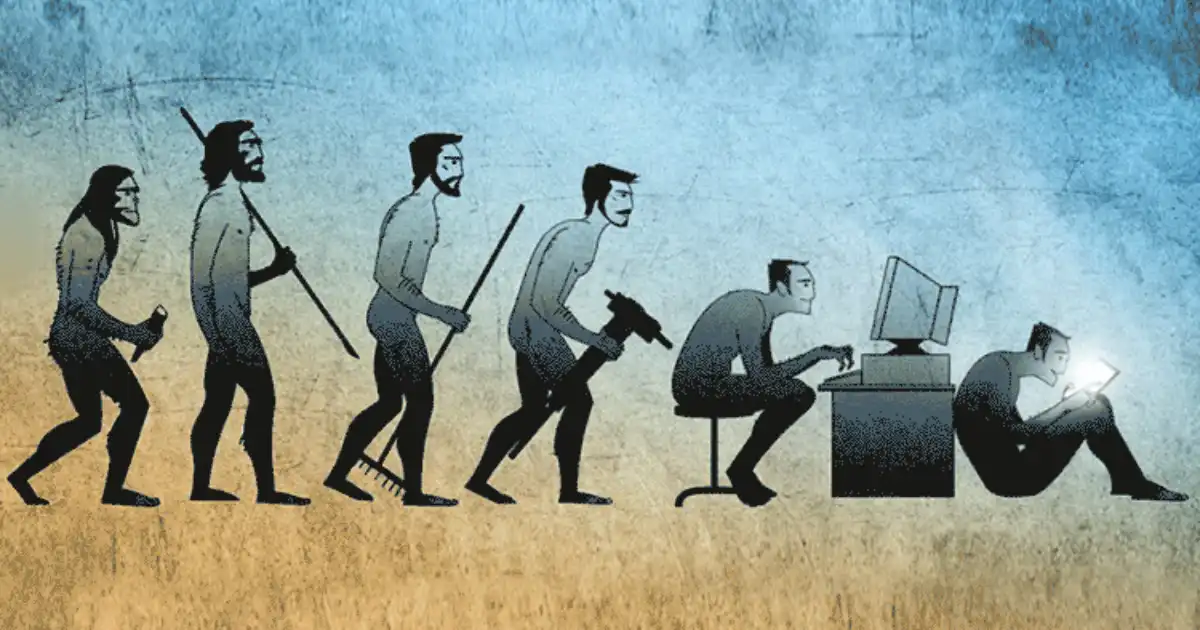
Before 1950
Before AI had a name, people were already thinking about intelligent machines.
In the 1930s and 40s, mathematicians like Alan Turing were exploring whether machines could follow logic the same way humans do. Turing’s idea of a “universal machine” showed that a single machine could perform any calculation if programmed correctly.
During World War II, early computers were built to crack codes and calculate trajectories. These machines were not intelligent, but they proved something important. Machines could process information in ways humans couldn’t.
That planted the seed.
1950s
This is where AI officially begins.
In 1950, Alan Turing asked a famous question: “Can machines think?” He proposed the Turing Test, which checks if a machine can imitate human conversation well enough to fool someone.
Then in 1956, a group of researchers met at the Dartmouth Conference. This is where the term “Artificial Intelligence” was first used.
Early experiments were surprisingly optimistic. Programs could solve math problems and play simple games. At the time, people thought human-level AI was just around the corner.
That turned out to be very wrong.
1960s–1970s
Early AI systems worked well in controlled environments but failed in the real world. For example, a program might solve a puzzle but couldn’t understand basic language or adapt to new situations.
One major effort was building systems that used rules. These are called “expert systems.” You feed the machine a lot of rules, and it makes decisions based on them.
In practice, this was hard to scale. The real world has too many exceptions.
Still, this period helped people understand what AI could and couldn’t do.
1970s–1980s
- This is where things slowed down a lot.
- Funding dropped. Expectations crashed. Many projects failed.
- Why? Because early promises were unrealistic.
- People thought AI would quickly reach human intelligence. Instead, they got systems that were brittle and limited.
- In my experience, this phase is important because it forced researchers to rethink their approach. Instead of trying to hard-code intelligence, they started exploring ways for machines to learn from data.
- That shift changed everything later.
1990s–2010s
This is where AI quietly became useful.
Two big things happened:
- More computing power
- More data
Machine learning started replacing rule-based systems. Instead of telling the computer what to do, you train it using examples.
A famous milestone was IBM’s Deep Blue beating chess champion Garry Kasparov in 1997. That showed machines could outperform humans in specific tasks.
Then in the 2000s and 2010s, things accelerated:
- Google improved search using AI
- Speech recognition became usable
- Image recognition got better
By the 2010s, deep learning came into play. This is a type of AI that works well with large amounts of data.
This is when AI started feeling real in everyday life.
2020s–Present
This is the phase most people are familiar with.
AI tools like ChatGPT, image generators, and voice assistants are now widely used. These systems can write, code, translate, and even create art.
The difference today is scale and usability.
- What used to require research labs can now run on consumer devices or cloud platforms. Businesses are using AI for customer service, automation, and analytics.
- In practice, AI has moved from “interesting experiments” to “daily tools.”
- But it’s still not true intelligence. It’s powerful pattern matching at a massive scale.
Key Milestones in AI Development
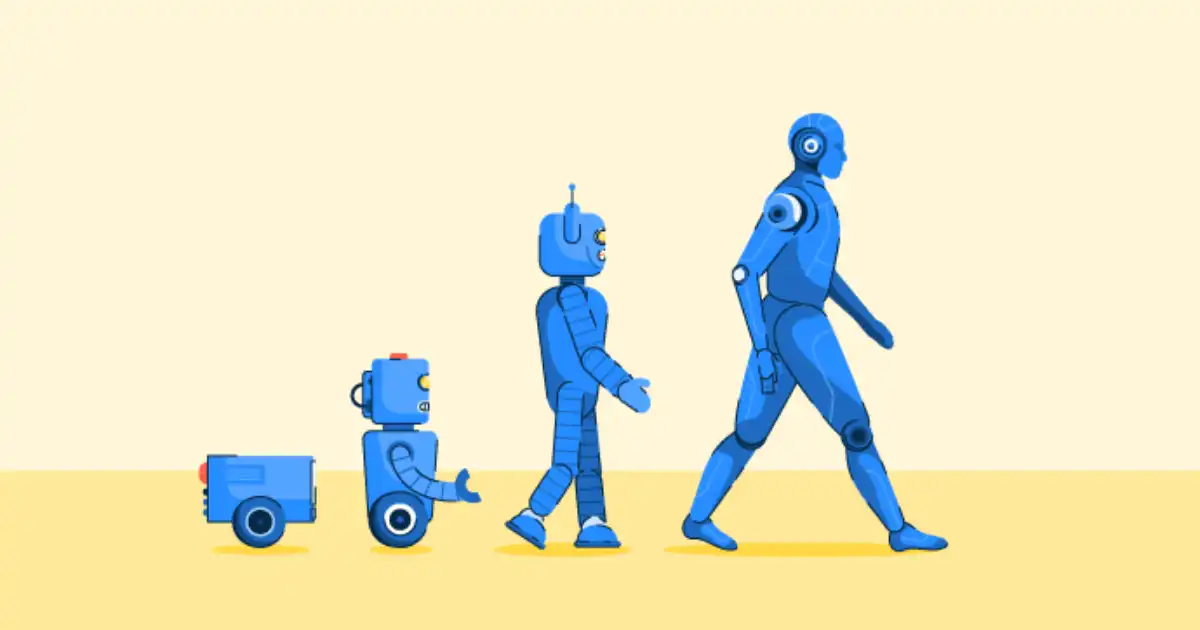
- The Turing Test gave a way to think about machine intelligence. It set the foundation.
- Deep Blue beating a chess champion proved machines could outperform humans in structured tasks. That shifted public perception.
- The rise of machine learning was huge. Instead of writing rules, systems could learn from data. This made AI adaptable.
- Then deep learning pushed things further. It allowed machines to recognize images, speech, and language much better than before.
- More recently, large language models changed how people interact with AI. Instead of coding commands, you just talk to it.
- What matters in practice is this: each milestone made AI more usable and less theoretical.
Why AI Took So Long to Develop
From the outside, it looks like AI suddenly exploded. But it didn’t. There were real limitations. Computers were too slow for decades. Early machines simply couldn’t handle complex calculations needed for AI.
Data was also a problem. AI needs lots of examples to learn. Before the internet, that data didn’t exist. Another issue was overconfidence. Early researchers thought intelligence could be programmed with rules. That approach hit a wall quickly.
In my experience, the biggest shift was realizing that learning matters more than rules. Once machines started learning from data instead of following strict instructions, progress sped up.
How AI Is Used Today
AI is already part of daily life, even if people don’t notice it.
- When you scroll social media, AI decides what you see.
- When you shop online, AI suggests products.
- When you use voice assistants, AI understands your commands.
Businesses use AI for:
- Customer support chatbots
- Fraud detection in banking
- Predicting demand and inventory
Healthcare uses it for analyzing scans.
Transportation uses it for navigation and early self-driving systems.
In my experience, the most useful AI is not flashy. It’s the stuff working quietly in the background, saving time and improving decisions.
The Future of AI
- AI will keep improving, but not in the sci-fi way people imagine.
- We’ll see better tools, more automation, and smarter systems. But AI will still depend on data and human input.
- There are limits. AI doesn’t truly understand context like humans do. It can make confident mistakes.
- There are also risks like job disruption, bias in data, and misuse.
- The future is not about AI replacing humans. It’s about humans working with AI more efficiently.
You Might Be Interested In
- Best Ai Tools For Simplifying Complex Tasks In Daily Life
- 7 Tech Megaprojects Making Uae A Global Ai Hub
- Can I Create My Own Blockchain?
- how does ai improve content quality and readability?
- 10 Mind-blowing Technologies Being Tested In Neom
Conclusion
AI has been around for over 70 years as a formal field, with its roots going even further back. What we see today is the result of decades of trial, failure, and gradual improvement. Each phase taught researchers something important, especially about how intelligence actually works in machines.
From a practical point of view, AI is not magic and it’s not new. It’s a tool that finally became useful after a long buildup. The real shift is not that AI exists, but that it now works well enough for everyday use. Understanding that makes it easier to see both its value and its limits.
