



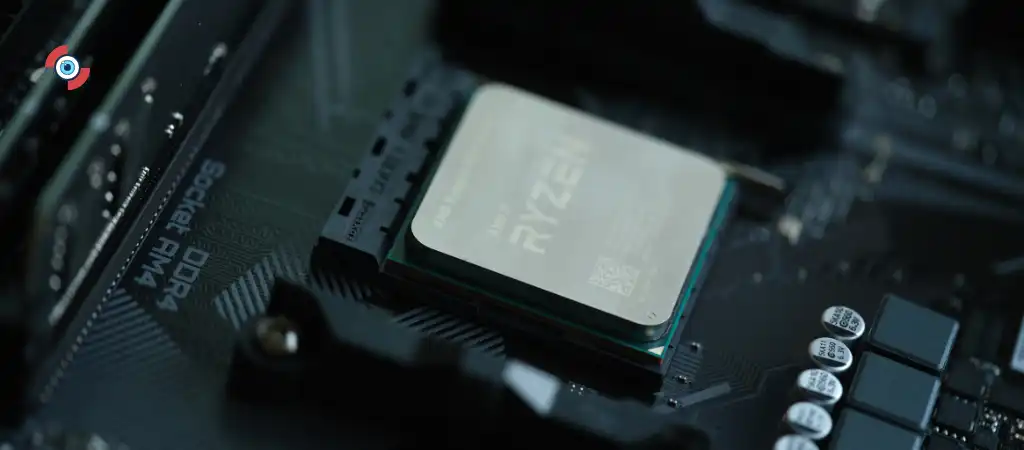
Choosing the right motherboard for your Ryzen 5 5600X is crucial for building a balanced and efficient system. The ASRock B550 Taichi Review highlights the distinct features and advantages of both the B550 and X570 chipsets, two popular choices for this mid-range processor.
In this comprehensive guide, we’ll delve into the specifics of both chipsets, their features, performance, and value for money to help you decide whether the B550 or X570, the Best Motherboard For Gaming, is better for Ryzen 5 5600X.

Understanding Ryzen 5 5600X
Before diving into the chipsets, it’s essential to understand the processor we’re dealing with. The Ryzen 5 5600X is part of AMD’s Zen 3 architecture, offering six cores and twelve threads with a base clock of 3.7 GHz and a boost clock of 4.6 GHz. It’s a versatile CPU suitable for gaming, productivity, and general-purpose computing, making it a popular choice among PC builders.
Key Considerations
When deciding between the B550 and X570 for your Ryzen 5 5600X, several factors should be taken into account:
- Performance and Overclocking
- Connectivity and Expansion
- Price and Value for Money
- Future Proofing
Let’s explore each of these factors in detail.
Performance and Overclocking
X570 Performance and Overclocking
The X570 chipset is known for its high performance and extensive overclocking capabilities. It supports PCIe 4.0 across all its PCIe slots and NVMe storage, offering double the bandwidth compared to PCIe 3.0. This is particularly beneficial for gamers and professionals who need the fastest data transfer rates for GPUs and SSDs.
The X570 chipset also has a robust power delivery system, making it ideal for overclocking. It features advanced VRM (Voltage Regulator Module) designs that provide stable and consistent power to the CPU, allowing for higher and more stable overclocks. For enthusiasts looking to push their Ryzen 5 5600X to its limits, the X570 chipset offers the necessary tools and stability.
B550 Performance and Overclocking
The B550 chipset, while more budget-friendly, also supports PCIe 4.0, but only on the primary PCIe slot and one NVMe slot. This limitation might not be a dealbreaker for most users, as the primary focus for PCIe 4.0 bandwidth is typically the graphics card and the main storage drive.
In terms of overclocking, the B550 chipset is quite capable but generally not as robust as the X570. The VRM designs on B550 motherboards can vary significantly between manufacturers and models, so it’s essential to choose a B550 board with a good VRM setup if overclocking is a priority.
Connectivity and Expansion
X570 Connectivity and Expansion
The X570 chipset excels in connectivity options. It offers multiple PCIe 4.0 lanes, which translates to more high-speed slots for graphics cards, NVMe SSDs, and other expansion cards. Additionally, X570 motherboards typically come with a plethora of USB ports, including USB 3.2 Gen 2×2, providing up to 20 Gbps of bandwidth.
Another advantage of the X570 chipset is its support for more SATA ports and faster networking options, such as integrated Wi-Fi 6 and 2.5 GbE LAN. These features make X570 motherboards ideal for users with demanding connectivity needs, such as gamers with multiple peripherals or content creators who require extensive storage solutions.
B550 Connectivity and Expansion
The B550 chipset, while not as feature-rich as the X570, still offers a solid range of connectivity options. It supports PCIe 4.0 on the primary slots, ensuring fast data transfer rates for the main GPU and NVMe SSD. However, secondary slots and additional NVMe slots typically operate at PCIe 3.0 speeds.
B550 motherboards generally come with a decent selection of USB ports, though not as many as the X570. Networking options are also slightly less advanced, with many B550 boards offering Wi-Fi 5 and Gigabit Ethernet, though some higher-end models may feature Wi-Fi 6 and 2.5 GbE LAN.
For most users, the connectivity options provided by B550 boards are more than sufficient, but those with more demanding requirements may find the X570’s offerings more appealing.
Price and Value for Money
X570 Price and Value for Money
X570 motherboards tend to be on the higher end of the price spectrum, reflecting their advanced features and capabilities. Prices can range from around $150 for entry-level models to over $500 for premium options with extensive features and robust build quality.
While the X570 chipset offers excellent performance and connectivity, the higher cost may not justify the additional features for all users. Gamers and professionals who need the extra PCIe lanes, advanced networking, and superior overclocking potential may find the investment worthwhile. However, casual users or those on a tighter budget might consider the X570 overkill for their needs.
B550 Price and Value for Money
B550 motherboards are generally more affordable, with prices starting as low as $100 for basic models and going up to around $250 for high-end options. This price range makes the B550 chipset an attractive choice for budget-conscious builders who still want to take advantage of PCIe 4.0 and decent overclocking capabilities.
The B550 chipset strikes a good balance between performance, features, and cost, making it an excellent choice for most Ryzen 5 5600X users. It provides sufficient connectivity and expansion options for typical gaming and productivity needs without breaking the bank.
Future Proofing
X570 Future Proofing
The X570 chipset is designed with future-proofing in mind. Its extensive PCIe 4.0 support ensures compatibility with the latest and upcoming GPUs and NVMe SSDs, allowing users to take full advantage of the fastest hardware available. Additionally, the advanced connectivity options and robust power delivery system make X570 motherboards a solid investment for those planning to upgrade their systems in the future.
For users who want to ensure their build remains relevant and capable for several years, the X570 chipset offers the necessary features and headroom for future upgrades.
B550 Future Proofing
The B550 chipset also provides a degree of future-proofing, particularly with its support for PCIe 4.0 on the primary slots. While it may not offer as many PCIe 4.0 lanes or as advanced connectivity options as the X570, the B550 chipset is still well-equipped to handle upcoming hardware releases.
For most users, the future-proofing offered by the B550 chipset is sufficient. It supports the latest Ryzen processors, fast NVMe storage, and modern GPUs, ensuring a capable and up-to-date system for years to come.
Detailed Comparison of Features
PCIe Support
X570 PCIe Support
- Full support for PCIe 4.0 across all PCIe slots and NVMe storage.
- More PCIe lanes overall, offering greater flexibility for multi-GPU setups and additional expansion cards.
- Ideal for users who require maximum bandwidth and expansion options.
B550 PCIe Support
- PCIe 4.0 support on primary PCIe slot and one NVMe slot.
- Secondary slots and additional NVMe slots typically operate at PCIe 3.0 speeds.
- Sufficient for most users but may be limiting for those with extensive expansion needs.
USB Connectivity
X570 USB Connectivity
- Multiple USB 3.2 Gen 2×2 ports offering up to 20 Gbps of bandwidth.
- More overall USB ports compared to B550 motherboards.
- Better suited for users with numerous USB devices and high-speed peripherals.
B550 USB Connectivity
- Decent selection of USB ports, including USB 3.2 Gen 2.
- Fewer USB ports compared to X570 but still adequate for most users.
- Suitable for typical gaming and productivity setups.
Networking
X570 Networking
- Integrated Wi-Fi 6 and 2.5 GbE LAN on many models.
- Better networking options for users who need faster and more reliable internet connections.
B550 Networking
- Wi-Fi 5 and Gigabit Ethernet on most models, with some higher-end options featuring Wi-Fi 6 and 2.5 GbE LAN.
- Adequate for typical home and gaming use but not as advanced as X570.
SATA Ports
X570 SATA Ports
- More SATA ports for additional storage devices.
- Better suited for users with extensive storage needs.
B550 SATA Ports
- Fewer SATA ports compared to X570 but still sufficient for most users.
- Suitable for typical gaming and productivity setups with a few storage drives.
VRM and Power Delivery
X570 VRM and Power Delivery
- Advanced VRM designs offering stable and consistent power delivery.
- Ideal for overclocking and maintaining stable performance under load.
B550 VRM and Power Delivery
- Varies between models; some high-end B550 boards offer robust VRM designs.
- Adequate for moderate overclocking but may not be as stable as X570 under extreme conditions.
You Might Be Interested In
- What Ram Is Compatible With Asus Rog Crosshair Viii Dark Hero?
- What Modulation Type Is Used For Computer Networks?
- What Is The Difference Between Motherboard and Microprocessor?
- How Many M 2 Slots Are In The MSI MPG Z490 Gaming Edge WIFI?
- Is ASUS TUF B550M Good For Gaming?
Conclusion
In conclusion, both the B550 and X570 chipsets have their strengths and cater to different user requirements. The X570 chipset excels in performance, overclocking potential, advanced connectivity, and future-proofing, making it ideal for enthusiasts and power users willing to invest in top-tier hardware.
On the other hand, B550 motherboards provide a more budget-friendly option without compromising on essential features like PCIe 4.0 support and decent connectivity. They are suitable for mainstream users who prioritize value for money and do not need the highest-end specifications offered by X570.
Ultimately, when choosing between B550 or X570 for Ryzen 5 5600X, assess your specific needs regarding performance, connectivity, overclocking ambitions, and budget constraints. This thoughtful consideration will ensure you select the motherboard that best complements your Ryzen 5 5600X build, providing an optimal balance of performance and affordability.
FAQs about is B550 Or X570 Better For Ryzen 5 5600x
Which chipset, B550 or X570, is better for gaming with Ryzen 5 5600X?
Both B550 and X570 chipsets are suitable for gaming with the Ryzen 5 5600X. However, if you prioritize maximum performance, future-proofing, and have a higher budget, X570 might be preferable due to its superior PCIe 4.0 support across all slots and better overclocking capabilities. B550, while more budget-friendly, still offers PCIe 4.0 on the primary slots and adequate features for most gaming needs.
Does B550 support PCIe 4.0 like X570?
Yes, B550 motherboards support PCIe 4.0, but with some limitations compared to X570. B550 provides PCIe 4.0 on the primary PCIe slot and one NVMe slot, whereas X570 supports PCIe 4.0 across all PCIe slots and NVMe storage. This difference is critical for users requiring extensive bandwidth for multiple high-speed devices.
Are there significant differences in overclocking capabilities between B550 and X570?
Yes, there are notable differences in overclocking capabilities between B550 and X570 chipsets. X570 motherboards generally feature more robust VRM designs and superior power delivery systems, making them better suited for extensive overclocking compared to most B550 boards. Enthusiasts looking to push their Ryzen 5 5600X to its limits may prefer X570 for its stability and support under heavy loads.
Which chipset offers better connectivity options: B550 or X570?
X570 generally offers better connectivity options compared to B550. It includes more USB ports, particularly USB 3.2 Gen 2×2 ports providing up to 20 Gbps of bandwidth, and supports advanced networking options like integrated Wi-Fi 6 and 2.5 GbE LAN on many models. B550, while adequate for most users with decent USB and networking features, may not match the extensive connectivity options of X570.
Is it worth investing in X570 over B550 for future-proofing?
Choosing between X570 and B550 for future-proofing depends on your specific needs and budget. X570 offers better future-proofing with its support for PCIe 4.0 across all slots, advanced connectivity options, and superior overclocking capabilities.
If you plan to upgrade to future high-bandwidth GPUs or NVMe SSDs and require maximum performance and connectivity, investing in X570 might be justified. However, for many users, B550 provides sufficient future-proofing with PCIe 4.0 support on primary slots and adequate features at a lower cost.
